The best way to look
strong and fit, is to
BE STRONG and FIT
 Link to this topic

Who is Crusty Ninja for?
Crusty Ninja is for the older crowd who not only want to look good, but feel good and perform like an athlete - a ninja if you will - okay, maybe an older slightly crusty ninja.
Crusty Ninja is for those who not only want to look good, but want to throw a football or get down on the floor and play with your grandchildren. If you want to be able to climb a tree. Don't need to climb a tree? What about climb a ladder or climb onto a roof?
Crusty Ninja is for adults who want to live their life to their fullest physical potential.
That doesn't mean you can't look fantastic and be freaky strong. Using these methods, I built a foundation that allowed me to easily transition into bodybuilding and earn a Pro Card in Masters Natural Bodybuilding and also win a world title in masters powerlifting and several national titles while breaking many records in the process. All the while I was participating in Parkour and obstacle course running. If you are strong, lean, and athletic, it's easy to excel in other physical activities, whether those sports are biking, golf, tennis, basketball, or pickleball. And yes, you can even perform well in natural bodybuilding and powerlifting.
Crusty Ninja emphasizes not only strength, but also body movement and incorporates gymnastics and Parkour. The goal is to climb ropes, do cartwheels, body rolls, and even some break dance moves. "But Crusty, I can't do a cartwheel! I have weak inflexible shoulders." You probably also can't run a marathon, but with proper training you could. I've encountered very few people who couldn't do a cartwheel with the right training. Are your shoulders weak and inflexible? We'll work on fixing that. Be aware, this is not a quick fix, instant gratification thing. It may take you a year or even more to get there, but most people can get there if they stick with it. Where are you going to be in a year otherwise?
Link to this topic

What is Crusty Ninja Training Like?
Crusty Ninja training is a combination of Fitness, Agility, and Strength Training (FAST). The goal is to not only get strong and fit, but functional. To develop the ability to run, jump, climb, and move large unwieldy objects.
The irony is many people say they want to look strong and fit, but nobody wants do what it takes to get strong and fit. They just want to "look" strong and fit. Well, here's some news for you: "It's easier to look strong and fit if you are strong and fit".
And you are never going to get either strong or fit by going to the gym and doing an hour of every variation of deltoid exercises. Sure, if you're in the final stages of prep for your Mr. Olympia appearance then pump your already massive delts. If you want to build massive delts so that you have something worth pumping up, then do overhead presses. You can't put icing on a cake you haven't baked yet. Bake your cake first - then add the icing.
Crusty Ninja is based on the principles learned by the ancient Greeks training for the Olympic sport Pankration (a submission sport that is a combination of wrestling and marital arts). While this doesn't focus on the fighting skills needed for Pankration, it relies heavily on their methods of strength and conditioning. It has been modified to suit the needs of older athletes and make use of modern equipment, but still follows the basic principles.
Why this style? Because it works.
Ancient civilizations were masters of trial and error. They would try something; if it worked, they kept doing it. If it didn't, they'd try something else. By this process of trial and error, they learned what worked and eliminated what didn't. If you do this for hundreds, even thousands of years, then you develop methods that produce the best results. And while the equipment we have available has changed over the centuries, the human body hasn't changed much. The ancient Greeks trained mostly with rocks, sandbags, and body weight. So now, instead of a room full of variously weighted sandbags and rocks, we now have loadable barbells and dumbbells. But the underlying principles of building strength and athleticism that worked a thousand years ago still work today. What has changed is the introduction of muscle-building drugs. Crusty Ninja style training is intended for older drug-free trainees and is built on principles that work best for drug-free trainees. If you're not on steroids, then you shouldn't train like you are.
The 4-day training cycle:
Day 1: Mind muscle connection
Day 2: Muscle Building via Full body compound lifts (See cycles below)
Day 3: Recovery, relaxation, stretching
Day 4: Body Movement, Coordination, and Mobility
Cycle 1: Full body routine A - sets of 8
Cycle 2: Full body routine B - sets of 8
Cycle 3: Full body routine A - sets of 5
Cycle 4: Full body routine B - sets of 5
Cycle 5: Full body routine A - sets of 3
Cycle 6: Full body routine B - sets of 3
Link to this topic
Two Sets vs. Three
You may have noticed that this training
uses two sets per main exercise versus three.
"It's intensity that builds muscle in
natural athletes."
With two sets, you can give it your all for
max intensity in both sets.
If you have anything left for a third set,
then you didn't give it your all on your first two sets.
You get about 66% of your strength gains
from your first set.
You get another 25% of your strength gains
from your second set
(this is of course assuming that these sets
are done with intensity).
And while the third set can offer some
gains, it also adds significantly to your neural fatigue load, which can actually
reduce gains over time. This is especially true of the big compound lifts such
as squats and bench press. For isolation exercises involving a smaller total
muscle mass, the neural fatigue factor isn't as pronounced and a third set may be
beneficial.
Also if you are young or intentionally
gaining weight (both of which improve recovery), then a third set might be
beneficial.
If you are older and restricting calories,
you may not have enough recovery, and a third set might actually be
counterproductive.
My rule of thumb is try two sets for a few
months. If you are making gains, congratulations, stick with what works.
If you are not making gains, add a third set
and see what happens. Everyone is different and there are few hard and fast
rules about sets and reps that apply to everyone. Sometimes you need a little
trial and error to see what works best for you. I have found that two sets on
the big exercises works best for me.
The bottom line is intensity is required to
build muscle in a natural athlete. So all your work sets must be intense. If
your third set feels dead and lackluster, you're doing more harm than good. If
your third set feels strong and refreshed, then your first two sets weren't
intense enough - FIX THAT!
If you Google the "Reg Park 5x5 Routine" that was popular in the 1950s and early 1960s (before steroids took over), it is similar to this. He had people doing full body three times a week with only two working sets per main exercise. This is how many professional bodybuilders trained back in the day before steroids made more volume possible and even necessary.
If you insist on doing a third set (I know a lot of you will), lower the weight for the third set by about 15% and do as many reps as you can to get a good pump.
"But I saw a study that showed three sets grew more muscle than two sets."
Don't get me started on study fallacies. The study you saw probably involved
only exercise a portion of the quads (typically the vastus lateralis and.or
vastus medialis). There's a huge difference between exercising a few isolated
muscles and exercising the whole body. Neural fatigue is pretty much a non
factor when only exercising a few muscles. Neural fatigue is a major factor when
exercising the whole body. What builds muscle best when only exercising only a
few muscles doesn't necessarily apply when trying to build the whole body,
making such studies meaningless for someone trying to build their whole body.
Link to this topic
Full Body vs. Split Routine
Mr. Pro Bodybuilder has been training for years and has a lot more muscle than you or I. If you're 260+ pounds of muscle, at some point, it becomes necessary to split up the muscle groups simply because it's too much muscle to train in one session. Very few people ever reach that point, but yet they train like they have. It's not the most efficient way to train, but at some point it becomes necessary. And again, very few people ever reach this point. Also, as mentioned in the steroid section, people on steroids with more muscle than their joints can handle have to incorporate low intensity/high volume training in order to stimulate muscle growth without risking injury. Trying to do this amount of volume for every muscle group on a 260+ pound bodybuilder in a single session is just untenable. A split routine makes more sense for them. But if me who is only a fairly solid 180 pounds tells you what I do and a pro bodybuilder who is 260+ pounds ripped tells you what he does, who are you going to listen to? Most people are going to listen to the pro bodybuilder and follow his routine. I get it. That's why the gym is full of newbies who can't even bench their own body weight doing split routines when they would get better results doing full body training about twice a week. They're doing a type of training that is not appropriate for the level of development they're at. Also, what they don't consider is that Mr. Pro Bodybuilder is leaving out the critical ingredient of his training style. It would be like someone giving you their cake recipe, but leaving out flour as one of the ingredients. Your cake will not end up like theirs.
On a historical note, before steroids came on the scene, almost no bodybuilder/strongman did split routines. Most trained full body 2-3 times a week. Even Arnold used a full body routine 3 x week early in his career as did many others such as Mike Mentzer. Eventually, they reached a point where they needed a split routine. Again, very few people ever reach that point. Honestly, ask yourself, "have you reached that point?" If not, why are you training like you have? This is what worked best before steroids came on the scene and changed the way the pros train. Full body training is how the ancient Greeks trained because through many years of trial and error they found that this worked the best. If they had found that split training worked better, they would have done that.
But Crusty, it takes me 2 hours to train a single body part. It would take all day to train every body part in the same session.
A full body workout is not doing a dozen different isolation exercises. It's typically a warm up followed by 4 to 6 main exercises with about 2 working sets per exercise and can be done in about an hour.
Crusty Ninja training incorporates full-body strength training every fourth day (Other days are used for balance, fitness, mobility, etc.). A typical Crusty Ninja strength session will have 4 to 6 main exercises with about 2 working sets per exercise. This is enough to trigger muscle growth across the whole body. Numerous studies have shown that you get maximal muscle growth by training a muscle about twice a week. So if this is enough to trigger maximal muscle growth for most people, why do most pro bodybuilders do split routines? The only real reason for a split routine is to allow for more volume as required by those on steroids.
Here's two typical full body training sessions:
Routine A
- Warm up
- Bench press (chest, front delts, triceps)
- Barbell row (lats, rhomboids, traps, rear deltoids, and biceps)
- Seated one arm overhead press (front delts, triceps)
- Hanging leg raises - (abs, core, hip flexors)
Routine B
- Warm up
- Incline press (upper chest, front delts, triceps)
- Stiff leg deadlifts (hamstrings, glutes, lower back)
- Dips (lower chest, front delts)
- Hammer pull ups (lats, biceps)
Each of the above routines work just about every muscle in your body. If needed, you can add an accessory exercise.
It has been long established that the sweet spot for building strength is working a muscle about twice a week. In fact, most split routines are based on hitting the muscle groups about twice a week. This accomplishes that in only two training sessions.
If you Google the "Reg Park 5x5 Routine" that was popular in the 1950s and early 1960s (before steroids took over), it is similar to this. The choices of exercises are slightly different, but the philosophy is very much the same. He had people starting with full body routines, with about four main exercises, three times a week, and only two working sets per main exercise. The Reg Park 5x5 was focused on putting on as much muscle as fast as possible. Even Arnold used Reg Park's training in his early days. Crusty Ninja is targeted to an older crowd, and while it is still about building muscle it also includes an emphasis on well-rounded athleticism, thus the difference in exercise selection, but the overall philosophy still works.
Reg Park also had some advanced routines that were geared for elite fulltime bodybuilders in their 20s. If you reach that level, you may want to look into those.
But for those who want to do a split,
here's a split routine for you.
Left side on Monday, Wednesday, Friday.
Right side on Tuesday, Thursday, Saturday.
Sunday is for bottom side.
(think about it. It makes just about as much sense as any other split routine)
Note: When I was younger, I trained full body 3 x week, but as I got older, it was too much for me to recover from and I have dropped to 2 x week. Now in my 60s, I only train heavy once every four days. Time is cruel master.
Link to this topic
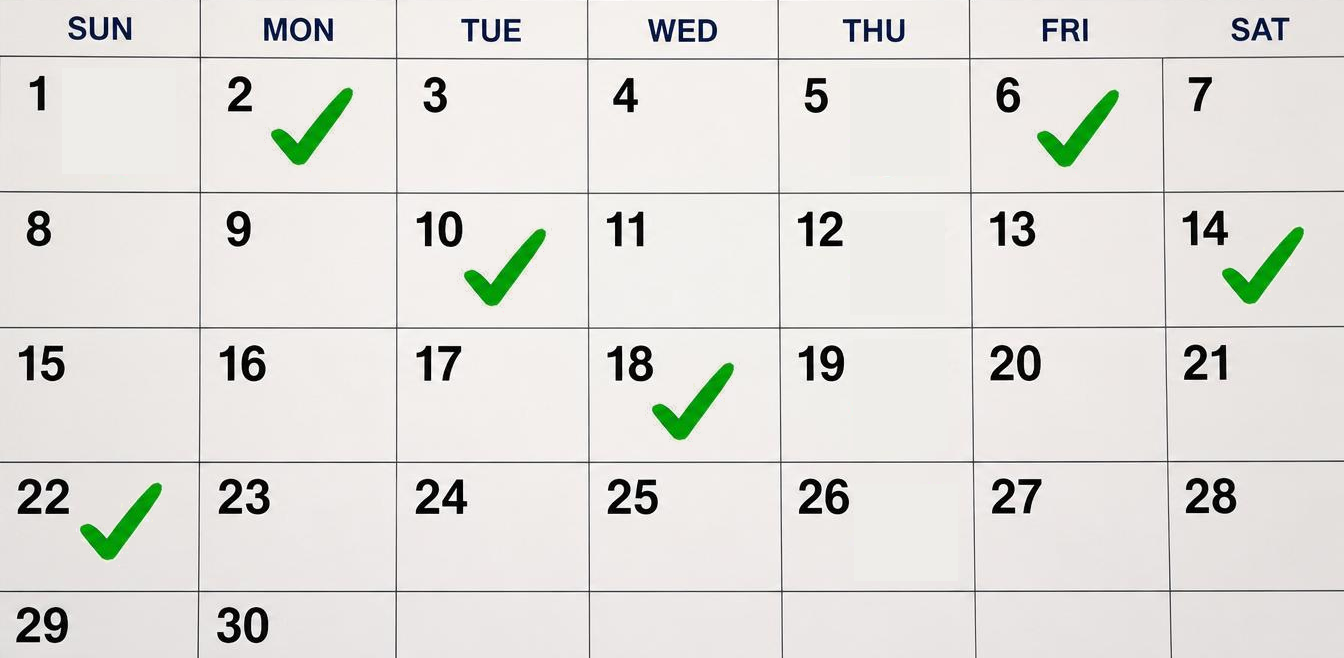
WHAT! Only Strength Train Every Fourth Day!
"But Crusty, I train 5 days a week."
Wow! You must be completely jacked if you have so much muscle that you have to break it down to separate days.
Most people will grow muscle faster if they take more rest days, and use the
extra rest to train harder on the training days with the big compound lifts (you
know, the ones that build muscle).
Two hard quality days of training a week will beat five mediocre days a week
every time.
If you're able to train 5 days a week and still recover (without the use of
drugs), then you simply aren't training that hard.
But to be fair, most people aren't capable of truly training hard with the big compound lifts. So they train bi's and tri's multiple sets to failure - oooh feel the burn.
If you are a professional bodybuilder with a massive amount of muscle, there
comes a time where you have to break your training up into muscle groups.
Very few people ever get to that point. Quit copying the training of people who
are genetically gifted, have years of training, and are taking massive amounts
of steroids - unless that describes you.
Most people will grow muscle faster if they take more rest days, and use the extra rest to train harder on the training days. Quality over quantity.
Quality Over Quantity Wins Every Time
Crusty Ninja training is designed for natural athletes and follows the training protocols that were predominant before steroids changed how people train.
It consists of heavy strength training every 4 days with the days in between devoted to fitness, balance, coordination, mobility, flexibility, and getting you preparing for your muscle-building day.
I have take many people from 5-6 days a week of lifting down to just twice a week heavy lifting and everyone of them said it wouldn't work for them, and yet every one of the, made better progress training only twice a week - or less.
Why Is That?
Because if you want to build serious muscle past the intermediate stage as a natural drug-free lifter then you have to train with intensity. You can either train with intensity or you can train with frequency. You can't do both.
And here's where we have to stop and define training. If you are a newbie or just doing a typical bi, tris, and abs workout, then yes, you can train more often. In fact, you probably should. But if you are doing real workouts such as benching, squatting, rowing, dips, pull ups, overhead presses, etc. (you know the exercises that actually pack on muscle), then no you can't. At least not if you are training with enough intensity to build muscle past the intermediate stage. Doing the big lifts with intensity too often will quickly lead to overtraining and stalled results.
So why do professional bodybuilder train more often? Because steroids not only make it possible, they makes it necessary. But as I say, if you're not on steroids, don't train like you are. Before steroids, most bodybuilders and strongman athletes trained heavy two to three times a week using a full body routine. Steroids changed that. See Steroids for more info.
But I Heard You Should Train Every Muscle Twice a Week
If you
are a full body training session every four days, then you are very close to
training every muscle twice a week.
Instead of splitting the muscles into 15 different exercises and splitting it
over multiple days, we do a handful of compound lifts that cover everything in
one session. I won't lie. It's hard work. Who wants to do squats when they could
do bicep curls?
Will You Try It? Probably Not
Gym Guy: Man, I wish I looked like you. What is your training like?
Me: A full body weight training session every four days consisting mostly of the big compound lifts with bodywork on the days in between.
Gym Guy: That'd never work for me. I have to lift at least 5 times a week.
Me: Have you ever tried lifting less often?
Gym Guy: No.
Me: Are you currently making gains?
Gym Guy: No.
Me: Well, you can keep doing what you're doing and not making gains or try my way for a month.
Gym Guy: No, it just wouldn't work for me.
Yes, only strength training once every four days. I know you don't believe me (no one ever does - until they try it), but most people will make faster gains by strength training about twice a week as opposed to four to five times a week. I know this for a fact. I have trained many older gym rats. Many came to me because their training had stalled and they hadn't made gains in years. They were typically doing at least four days a week of weight training; some as much as seven. I would cut them back to two days a week of strength training and one day a week of mobility, balance, etc., with rest and general fitness on the other days. Without exception, everyone of them began making gains again. Sometimes, quite dramatically. These people were overtraining. They were not allowing enough recovery time for their muscles to grow or for them to be rested enough to train with the intensity needed to spur new muscle growth.
Now, I'm not talking about newbies. Newbies get decent results almost no matter what they do and most can't train hard enough to overtrain even if they wanted to. I'm talking about people who had been training for at least a year and were long past their newbie gains and were stuck in a rut.
One of the first things you'll notice when you switch to the Crusty Ninja style of training is that your joints start to feel better and you have more energy for training.
What? You mean not beating up my joints five times a week will make them less achy?
IKR, sounds crazy but it's true. People beat on their joints five times a week and can't figure out why they always hurt. Imagine if instead you spent the days in between doing joint health and healing exercises? What would your joints feel like then?
Overtraining is one of the biggest detriments for typical drug-free gym goers. They almost all do it. That's because that's what the pros do. But remember, the pros are genetic outliers and are taking substances that allow them to train more than the average drug-free trainee can. Copying what they do does not work well for most people.
Your training should be more like what people did before steroids came on the scene and changed the way the pros trained.
One of the things overtraining does is decrease your testosterone production leading to poor training results. Don't forget, your pros and influencers are getting their testosterone externally. When you do steroids, your natural testosterone production drops to almost zero. So someone on steroids doesn't have to worry about training in a way that lowers or increases their natural testosterone production - because they couldn't get their natural testosterone production any lower or higher if they tried. Their testosterone levels are dictated by how much they inject. Their body has shut down its own production. As a natural trainee, you have to train in a way that maximizes your natural testosterone production. I don't mean to harp on steroid use, but it is important to understand the difference between training naturally and training on steroids. Crusty Ninja training is based on how people trained before steroids existed.
As a natural trainee, you have to train in a way that maximizes your natural testosterone production
Advantages of Heavy Training Only Once Every 4 Days
Decreased Joint Issues
This allows more time for joints to recover and allows for training sessions on the other days that focus on improving overall joint health.
More Energy for Your Training
With only training once every four days, those days are going to feel like killer days.
Monday: I train heavy.
Tuesday: I know I'm not ready to train heavy again.
Wednesday: I could train heavy again, but I know I'm not 100%.
Thursday: I really feel like I'm ready to train heavy, but I don't.
Friday: Energy is through the roof, my joints feel good, heavy day again, and I kill it. I feel good enough and have enough energy to train with the intensity needed to actually work the muscles hard enough to make gains.
Less Time in the Gym
With less strength days, your life isn't spent in the gym. Most of the other day's training can be done at home.
Note: Some people would see this a bad thing, as going to the gym is their escape. Some people go to bars and clubs to relax and unwind, others go to the gym. Ironically, this can be one of the hardest parts of Crusty Ninja style training - staying out of the gym. I'm subject to this as well. Some days I'll go to the gym just to do stretching and mobility work, even though I could easily do these at home. I like and enjoy the atmosphere at the gym.-
Muscle Gains
As hard as it is to convince people of this (until they try it), they will make faster muscle gains with a hard session every four days, than they will doing a 4-5 day bro split.
- Weight Management
For your muscles to grow after exercise, they need building materials. Muscles recover and grow faster when you are in a calorie surplus. That's just a fact. And yes, you can build muscle while in a calorie deficit, it will just be much slower.
Under the Crusty plan, you eat in a slight calorie surplus on your heavy lifting days and the day after to allow your muscles to grow as fast as possible. Eating in a surplus will eventually lead to fat gain. To compensate, you eat in a calorie deficit on the non-heavy lifting days, to either maintain or decrease your body fat level. This is easy to do if you are only in a surplus two out of four days, or about half the week. If you try to maintain a calorie surplus five days a week, that can be difficult to overcome. The Crusty way leads to optimal muscle growth while maintaining or decreasing your body fat.
Here's a typical case study of switching to 2 x week:
Older male in his early 50s comes to me because he hadn't made any strength gains in over two years. He was training 6-7 days a week 2-3 hours a session. I cut him back to my traditional 1-hour sessions of 2 x week strength plus 1 x week mobility/functional. In about a month (it typically takes about a month to recover from overtraining) he started making gains again. This went on for several months of steady gains until he stalled again. He was showing definite signs of overtraining, but he swore he was resting on his off days. This didn't make any sense until one day I was talking to a friend of his who told me about the "killer workouts" the two of them had been doing at another gym on his off days. They had started these sessions just a few weeks before he stalled - what a coincidence. I convinced him to stop the extra sessions and lo and behold, he started making gains again.
If you are drug free and not genetically gifted, then you can only train so much before it becomes counter productive.
I wish I could say this was a one-time occurrence, but this is an ongoing problem with Crusty Ninja style of training. Stopping people from doing more than is prescribed. I can't even count the number of times people have sabotaged their training by adding in extra gym days. One of the problems is that if you train just the amount needed and no more than that you start feeling good. Your muscles are rested, your joints feel good, and you just start itching to go the gym. I know, because I fight this myself. I'm obsessive and compete at a very high level (former World Champion) and am semi-retired and have lots of free time on my hands. If I thought I could get better results training seven days a week for four hours a day, I'd do it. But through trial and error (much like the ancient Greeks), I have found the max that I can do before I start going backwards is at most about once every four days of strength training with cardio, mobility, balance, etc. on the days between. That is what gets the best results. That is what gets most natural older athletes the best results. That is the optimal training. And that is what Crusty Ninja is based on.
The Elevator Theory
Take the example of using an elevator. You go in and press the button for the floor you want. If you keep
pressing the button, will the elevator get there any faster? No, all you're
doing is wearing out the button. The human body is much the same. Do enough strength
training to "push the button" to stimulate muscle growth and then give
it a chance to happen. Doing more than this is just wearing you out. And to stretch this
analogy a little further, what if you go into the elevator and push ALL the
buttons? Now, it's going to take even longer for the elevator to reach its destination. Same with your
body. At some point "pushing all the buttons" by extreme overtraining will
actually slow down your gains.
Once you have done enough to stimulate growth, STOP. You can only stimulate so
much growth per session. Additional training will not stimulate more growth.
You've pushed the button. Doing more is at best just wasting time. At worst, you're
actually impeding your gains.
I have the hardest time convincing people that this style of training will work for them. They see me at 65 years old doing cartwheels and gymnastics-style bar exercises while maintaining a decent lean muscle mass and moving fairly large weights around and ask what my training is like. When I tell them, they always say they would never be able to make gains on once every four days of full body strength training. They are convinced that they must do a 4-5 day bro split. The handful that I get to try it and stick with it soon become believers (until they get bored and start missing the gym - and start adding in those counterproductive extra sessions).
The Definition of Insanity
They say the definition of insanity
is doing the same thing over and over again and expecting different results
If what you are doing is working, great keep doing it. If it's not working, try
something different.
Link to this topic

Stretching and Yoga
The Crusty Ninja program includes stretching. The value of basic stretching is hard to overstate. You don't need to become a yoga master, but you do need basic flexibility. Along with reducing injuries, basic stretching also helps strengthen tendons and ligaments and speed up recovery. Luckily, you don't need much. Ten minutes 3-4 times a week is plenty. When doing static stretches, as mostly used here, holding the stretch for 30 seconds is all that is needed to get most of the benefit that you are going to get from the stretch. If your goal is to improve flexibility, then after that the law of diminishing returns applies. Repeating the stretch in the same session will only marginally increase its benefit. Sort of like high intensity strength training. You get most of the benefit from the first working set, not as much benefit from the second working set, and only a little bit more from the third.
If each stretch is held for only 30 seconds, then in 10 minutes you should be able to get about 10-15 different stretches in (add in time for transitioning, catching your breath, etc.). You can easily cover stretching your whole body with this.
"But Crusty, if I only need 10 minutes of stretching per session, then why are most yoga/stretching classes an hour or more?"
Several reasons. Most yoga/stretching classes include other things along with them, such as strength, meditation, and breathing. These can add significantly to the overall time of the class. Also, there is an unwritten rule that gym classes, especially ones you pay for, must be at least an hour long. Are you going to pay $8 or more for a 10-minute class? So, instructors will lengthen the class by repeating stretches, even though this adds little benefit.
If you enjoy doing longer yoga/stretching classes, then by all means do so. There's generally little harm, but it won't improve your results much. And if it includes mediation, breathing, and relaxation, these can have benefits on their own.
Warning! Only do the basics. You only need to do beginner's stretching. For
many people, doing the advanced stretching poses more risk than benefit. Some
people are naturally flexible and willing to spend the time needed to master
advanced stretching. These people become yoga instructors. The average person
will only hurt themselves trying to copy them. I think a lot of yoga instructors
suffer the same problem that old rock musicians suffer. They've been playing
their hits from the 1970s for years and are sick and tired of them. So we go to
their concert hoping to hear our favorites and the first thing they say when
they get to the stage is the dreaded phrase, "Tonight, we're going to be playing
our new stuff". I get it, you've been playing the same songs for over 40 years
and you're sick of it. But I didn't pay for an overpriced concert ticket to
hear your new stuff (rant, rant, rant). Anyway, yoga instructors have the same
problem. They've been doing, cat, dog, camel, triangle, etc. for years and
they're bored doing them. So they have people trying to stick their head
between their legs while standing on one foot. Impressive to watch them do it,
but you'll most likely just get hurt.
- Don't do any pose that feels wrong for you
- Don't stand on your head or put pressure on your neck
- Don't put you leg behind your head
- Don't try to balance on one hand
- Don't do anything beyond beginner's level
For someone who just wants to feel good and move well, there's no need for anything beyond beginner's stretching/yoga.
Here's a simple basic routine to get you started, but I still recommend classes and other resources.
All poses are done slowly and with control.
Broomstick Twirls (shoulder mobility)
Hold a dowel, broomstick, or stretch band with a wide grip and slowly circle it
from your hips, over your head, and all the way down to your lower back with
locked elbows.
10 circles per side.
Child's Pose (open up the shoulders and lower back)
Start on your hands and knees, push your hips back
toward your heels, and extend your arms forward. Hold for 5 deep breaths to open
up the shoulders and lower back.
Hold for 30 seconds
Cat-Cow (activate the core and mobilize the spine)
Move
to all fours. Inhale, drop your belly, and lift your chest (Cow). Exhale, round
your spine toward the ceiling, and pull your belly button in (Cat).
Repeat slowly for 1 minute
Downward-Facing Dog (to build shoulder stability and stretch the calves)
From all fours, tuck your toes and lift your hips up
and back into an upside-down "V" shape. Keep a slight bend in your knees if your
hamstrings are tight.
Pedal your feet out for 1 minute.
Bird-Dog (activate the core, glutes, and shoulders)
From tabletop, extend your right arm forward and left leg straight back. Engage your core to keep your hips level, hold for 3 seconds, and switch sides. Repeat 5 times per side.
Glute Bridge Pose (activate the glutes and core)
Roll onto your back, bend your knees, and place your feet
flat on the floor close to your hips. Pressing through your heels, lift your
hips toward the ceiling while squeezing your glutes.
Hold the top position for 2 seconds, lower down, and repeat for 10 controlled
reps.
Warrior II (stability)
Stand with your feet wide, turn your right foot out, bend
your right knee, and stretch your arms wide. Look past your front right hand and
squeeze your legs inward toward each other for stability.
Hold for 5 breaths,
then switch sides.
Seated Forward Fold (hamstring stretch)
Sit on the floor with your legs straight out in front. Inhale to sit tall, then hinge at your hips and fold forward with a micro-bend in your knees to stretch the hamstrings safely. Hold for 5 slow breaths.
Supine Twist (release the lower back)
Lie flat on your back, pull your right knee into your chest, and gently drop it across your body to the left side. Open your right arm out to the right. Hold for 5 breaths, then switch sides.
Kettlebell Windmill (hip mobility, thoracic rotation, shoulder resilience)
Press a light kettlebell or dumbbell (no more
than 10 pounds) overhead with your right hand, locking the arm out completely
with your palm facing forward.
Point toes 45 degrees to the left (away from the side holding the weight).
Keep your eyes on the kettlebell.
While pushing your hips back, slowly slide your left (free) hand down the inside of
your left (non-kettlebell) leg as low as you can without rounding the lower
back.
Reverse by driving your hips forward and returning to a fully upright standing
position while keeping your eyes on the kettlebell.
Note: The purpose of the kettlebell is ONLY to help you keep your arm straight
up into the air. The weight helps you feel when your arm moves from this
position. DO NOT use heavy weights for this exercise. This is a mobility
exercise, not a strength exercise.
Do 5 slow reps per side.
Link to this topic

Protect Your Joints
You'll notice that some of the descriptions of how to do various exercises are different from what you might have seen elsewhere. That's because the focus of Crusty Ninja training is developing long-term strength and fitness while protecting your joints from damage. The exercise form that allows you to lift the biggest weight or get the most reps may not be the best for your joints. Most exercise descriptions, especially from your gym bros, are based on what allows them to lift the biggest weight and impress the other gym rats. But this is where you have to check your ego at the door.
A good example is the bench press. Many people, especially beginners, can bench more weight with their elbows flared out from the sides as opposed to elbows tucked nearer the sides of their body. If you've ever done narrow grip bench press, you know exactly what I mean. The problem with benching with elbows flared is that it puts the shoulders and rotator cuffs in a vulnerable position for injury. This is one of the reasons that the bench press gets such a bad reputation as a shoulder wrecker and why so many bench pressers have shoulder issues.
But Crusty, won't my muscles grow faster if I lift the biggest weight that I can handle?
This is a misunderstanding and one of the basic principles of strength training. Yes, in general the bigger the load you place on your muscles the faster they will grow. But the biggest weight and the biggest load are not always the same thing. That deserves repeating: "the biggest weight and the biggest load are not always the same thing". With all else being equal, yes the bigger weight will create a bigger load, but if you place a muscle in a mechanical disadvantage you can create the same load forcing the muscle to work just as hard with a smaller weight. It's all about leverages. In the case of the bench press, moving the elbows closer to the body puts the muscles at a mechanical disadvantage, thus even with a smaller weight they are under the same load and working just as hard. The advantage of course is that now your shoulders are in a better protected position making it less likely to injure them or do long-term damage to them. So, there'll be more damage to your ego, but less damage to your shoulders. And your muscles will grow just as fast because they are working just as hard.
That being said, as a former world champion powerlifter my competition bench press style is very different from my day-to-day training style. In a competition, my goal is to bench the biggest weight that I can. Outside of competition, my goal is to make my muscles as strong as possible without doing damage to my joints. Two very different goals and they need very different lifting styles. Grinding your shoulders a couple of times a year for competitions is not going to do much lasting damage, but doing it all year long will. As I often say, my success in powerlifting is based more on longevity than being all that great. I compete full raw. Most people by the time they reach my age either have bad shoulders and can't bench, or bad knees and can't squat, or a bad back and can't deadlift. Powerlifting is based on your total for these three lifts and most people my age have at least one lift they can't do well due to joint damage. So while I'm not great at any of these, I don't suck at any of them either, so my total is generally good enough to win.
Link to this topic

My Elbow Hurts
Elbow pain is one of the most common gym complaints, and ironically is fairly easy to remedy.
The remedy:
- Quit overtraining. Not to be snarky, but 5 days a week of straining your elbow tendons and
people act surprised when their elbows start to hurt.
See Why Only Train Hard Every Four Days - Work on forearm strength. Your forearms stabilize the elbow. If you make
your biceps stronger than your forearms can stabilize, your elbow will
eventually hurt. Strengthening the forearms is generally the long term solution for elbow pain.
In general, any joint where the muscles around it are unbalanced with each other will eventually lead to pain. - In the meantime, rest and rehab till it heals.
The stages of elbow pain:
- The first stage of pain is tendinitis, where the elbow tendons are inflamed and hurt. Typically takes a few weeks to heal.
- The second stage is tendinosis, where the tendon has broken down. Typically
takes several months to heal.
This happens when people have tendinitis but keep straining it anyway. When you have pain, STOP and work on addressing that.
See also Protect Your Joints
Link to this topic

Back Pain
Imagine if you had weak arms and had to
carry a heavy load all day.
Do you think your arms would hurt at the
end of the day?
Do you think strength training for your
arms would make the situation better?
Or should you avoid strength training for
your arms because they hurt?
Imagine if you had a weak back and it had
to carry you all day.
Do you think your back would hurt at the
end of the day?
Do you think strength training for your
back would make the situation better?
Or should you avoid strength training for
your back because it hurts?
This is how most people reason this out.
- Arms? Yes, let's make my arms stronger so they can handle the load.
- Back? No, my back hurts, I don't want to do any exercises for it.
If you have a weak lower back chain (lower back, glutes, and hamstrings), you will have back pain.
If you have a weak lower back chain, you will have back pain.
The big mistake people with low back pain make when the do strength training is they only focus on the lower back.
It's not enough to just have a strong lower back.
Your glutes and hamstrings stabilize you pelvis. Weak hamstrings and glutes will force the lower back muscles to overwork for pelvic stability and shock absorption. This will cause chronic back fatigue and tightness. This can also lead to inflammation which will put pressure on your sciatic nerve, leading to excruciating back pain.
You must strengthen the whole lower back chain.
If you have back problems, first find out what the source of the problem is and work on fixing that.
But know this. Your back problems will never be solved until you have a strong lower back chain.
P.S. If you have weak hamstrings, you will likely have knee pain.
Link to this topic
Would You Put a Big Engine in a Car with a Broken Frame?
Of course you wouldn't put a big engine in a car with a broken frame. But, this is exactly what people do in the gym. They want to put big muscles on a body with a broken frame. And then wonder why they get injured. Remember, "Mobility without strength is useless. Strength without mobility is an injury."
Mobility without strength is useless. Strength without mobility is an injury.
If you are too immobile to do a flat-footed deep squat, then you will eventually injure yourself squatting. EVEN IF you are not deep squatting. I see this all time. People who lack the mobility to deep squat will compensate by either reducing their depth or raising their heels. Calf muscles that are too tight to deep squat will eventually lead to an Achilles heel injury. Tight hamstrings will lead to lower back and hip pain - and an eventual injury while squatting. Then they (and their doctor) will tell everyone that squatting is not good for old people. The reality is proper squatting is great for old people. Squatting with a bad frame is bad for everyone. Same applies to the bench press. Bench press requires shoulder mobility to get the shoulders into the safe position for benching. If you can't reach behind your back to hold a bar for back squatting, then your shoulders are too tight to safely bench. If your shoulders are too tight to do a windmill exercise, then you lack the mobility to safely bench.
Real life: Saw a friend at the gym and he was using a safety squat bar (allows the bar to rest on your shoulders while you hold the bar from in front of you). I asked why. He said his shoulders were too tight to reach back to grab the bar. I said, that lack of mobility is a bench press injury waiting to happen. Sure enough about a month later, I saw him wearing an arm sling. He said he tore his shoulder up doing his warm up benches. Irony is his wife was there and is a physical therapist and said she'd been telling him that for months. Fix your broken frame first
Link to this topic
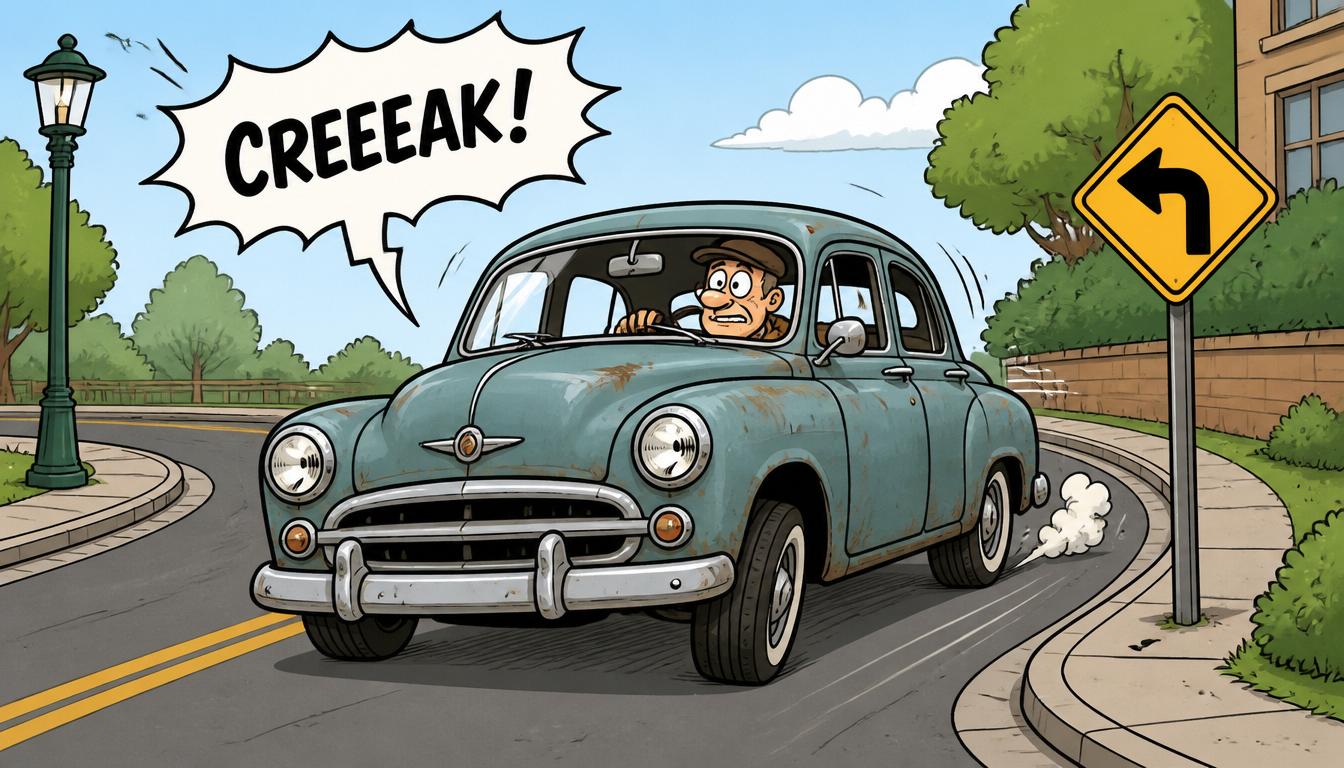
If You Had a Car that Creaked When Making Left-Hand Turns, Would You Stop Making Left-Hand Turns or Would You Fix It?
If you had a car that creaked when making left-hand turns, would you stop making left-hand turns or would you fix it?
If doing a normal exercise movement causes issues, do you stop doing that
movement or do you fix it?
The typical Gym Rat attitude is stop doing it.
I say fix it the underlying problem, you'll thank me later.
Gym Rat:
"When I press overhead my shoulder hurts, so I don't do overhead presses."
Crusty: Overhead presses shouldn't hurt. So, temporarily quit doing overhead presses,
while working on fixing your shoulder. You'll thank me later.
Gym Rat:
"My lower back hurts when doing deadlifts."
Crusty:
Fix your back, you'll thank me later.
And so on and so on…
The whole point of Crusty Ninja training is not to just make stronger, but make you healthier and more mobile and able to do all the basic movements.
I had a client that had major reconstructive surgery on his shoulder back
in the 1970s. Doctor told him he'd never be able to lift that arm over head, so
for over 40 years he just accepted that and had never lifted his arm over his
head.
I said let's find out. Every session we did arm raises as part of the warmup and
he would raise his arm as high as he could. Every session it moved a little bit
further. Eventually he was lifting 10-pound dumbbells straight up over his head.
Didn't happen fast (over a year).
I also had a client that had major
reconstructive surgery on his shoulder and without further surgery, and his arm
was NEVER going to go overhead. Due to the type of surgery, it was physically
possible. Every case is different.
Don't blindly accept that you can't do a standard movement. Most people should
be able to do all the standard movements. If you can't, see a therapist. He
should have been working with a physical therapist from the beginning, but that
was the 70s.
I'm aware that some things can't be fixed (rarely).
For example, if you have Celtic hips, that can make certain exercises painful.
You can't change the bone structure of your hip sockets through exercise.
But at least find out the cause.
Link to this topic

I Can't Squat
Almost all my older lifters when they start will tell me that they can't squat because they have bad knees, hips, back, etc. They ALL eventually squat - and squat significant weights and ironically those issues that they complained about lessen as they get better at squatting. Classic example: Had a guy in late 50s who worked standing all day and when he got home would ice his knees because they hurt so much. Just like everyone else, when we started training he said he couldn't squat because he had bad knees and was bone on bone. Two separate doctors had told him the only cure for his knee pain was knee replacement surgery. We squatted… and squatted… One day he tells me he hasn't iced his knees in over a month. He hadn't stopped on purpose, but his knees just weren't hurting anymore.
Knees quit hurting after getting good at squats. What Changed?
So what happened? His knees were still bad, the cartilage was still worn, this hadn't changed. What did change was his legs were stronger. Think about this. When you stand, it's your leg muscles that are supposed to support you. If your leg muscles are too weak to support you, then it's your bones that have to support you. Instead of your muscles holding you up, it's now bone grinding on bone. Do this all day and your knees are going to hurt - even if you have good knees.
I've noticed that most people's knee issues go away (or at least are greatly reduced) when they can squat a bar loaded with their body weight. This makes sense if you think about it. When you squat a bar loaded with your bodyweight, your legs are actually supporting almost twice your bodyweight (the bar + your own weight), which means each leg is supporting close to your own bodyweight. Likewise, when you're walking and raise a foot off the ground the other leg and knee are supporting close to your bodyweight. If your muscles are not strong enough to do this, then it's up to your bones to support you. Do this all day and you will have knee and probably hip pain. You will likely have pain even if you have good knees and hips. If you have bad knees and hips, then it's going to be that much worse. To make matters worse, when someone's legs are too weak to support them, they will drive their knees together for support. You see this in very overweight people when they are standing. This will definitely cause knee pain over time.
If your muscles can't carry you, then your bones have to do the work.
If you can't properly squat a bar loaded with your body weight, then you will be forced to grind your knee bones together when you walk. And you are going to have knee pain - even if you have good knees.
The problem with squatting, is very few people do it correctly. I see this in the gym all the time, especially among beginners. The most gawd awful squats you've ever seen. They are generally doing more harm than good. If they do this long enough, then they will eventually injure themselves. This is how squats get a bad name. Learn how to squat correctly and learn how to squat deep.
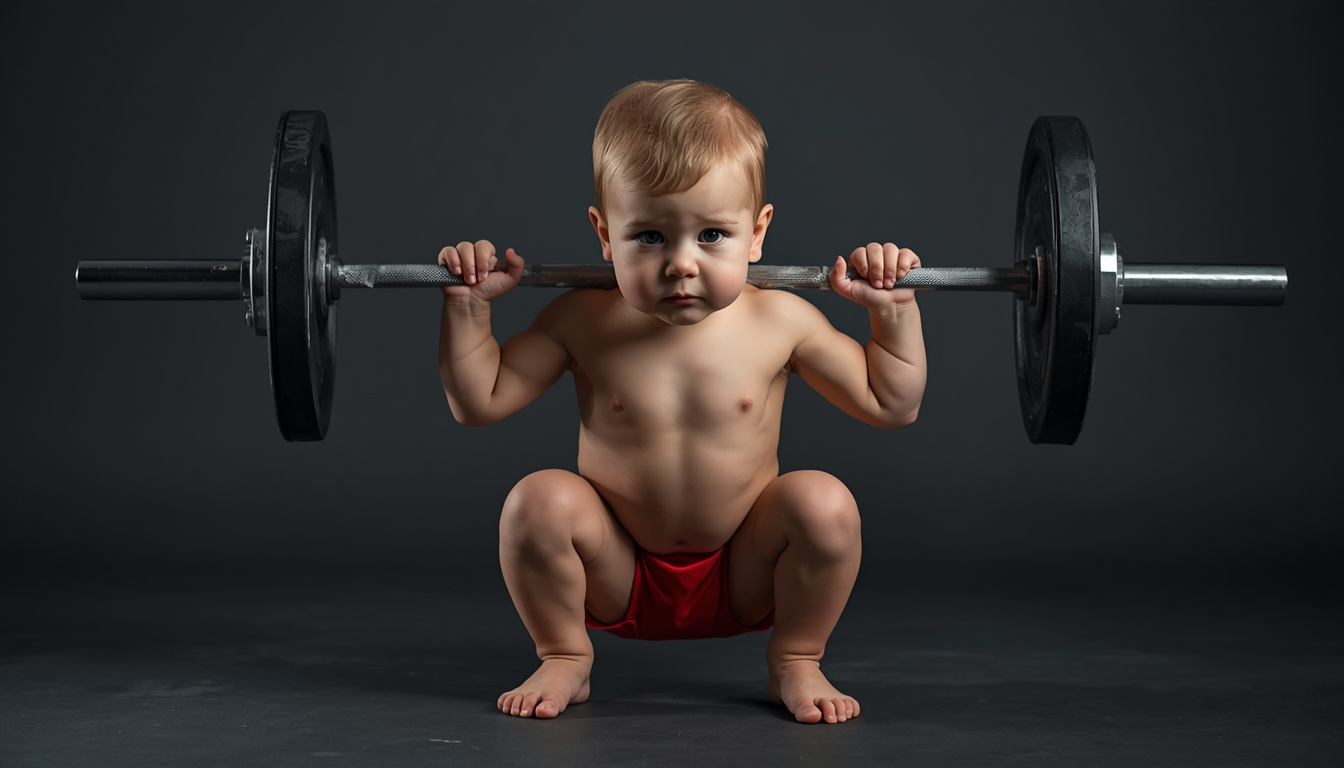
Why do we squat deep?
Squatting deep maximizes muscle growth, improves knee ligament strength, and boosts glute and quad activation. Contrary to popular beliefs, research shows deep squats strengthen ligaments and improve long-term knee stability.
"But really, I can't squat deep."
Ever seen a healthy 2-year-old that couldn't deep squat? We lose this as we get older because we allow our hips, ankles, and lower back to stiffen up as we age. So before you say you can't deep squat, look at correcting these things first. Basic stretching goes a long way to fix a lot of the things we think we can't do as we age. Read more about stretching.
Why does everyone else squat to parallel?
Mostly because it's easier and you can squat more weight. Secondly, because
that's how they do it in competition.
Squatting to parallel (or thereabouts depending on the federation) was chosen
for competitions because it's easier to judge, not because it is how you should
train. Squatting to the best depth for training was not even a consideration. Remember, a
competition is for demonstrating strength, not building strength. Training is
for building strength. I don't know why people get these two confused.
Don't squat with your heels raised
The two main reasons for squatting with your heels raised is to 1) target the
quads over the hamstrings and 2) to make up for lack of mobility. The Crusty
Ninja program is about building a balanced musculature, thus we rarely target
muscle groups and focus on building muscles that work together in balance with
each other.
If you have mobility issues, that needs to fixed, not just compensated for. The
squat progression below will develop the needed mobility.
But I have long femurs
If you have long femurs, then squatting will be more difficult and you will likely never be a champion squatter. Bad leverages and all. So what? Most of us will never be a champion squatter either. That doesn't mean you can't benefit from squatting. You don't have to be great at something to benefit from it. I'll never be a champion runner, but I can still benefit from running.
How wide to spread your feet
Again you'll hear different recommendations from bodybuilders and powerlifters than what we do here. And they're not wrong, they are just answering a different question. A bodybuilder may want to emphasize a particular muscle group for aesthetic reasons. A powerlifter may want to use the foot position that allows them to squat the most weight. Both are good goals them. But here at Crusty, we want to build balanced athletic physiques while not harming our joints. Most people's hips do not like being loaded while spread apart. This can cause impingement which to lead to long-term damage. We want to pick a foot width that is easiest on the joints and allows the muscles to work together in a balanced fashion.
The correct foot width is different for everyone depending on how your hip sockets are formed.
Some people's hip sockets, especially women, tend to splay out. Others tend to point forward.
Some people have deep sockets and a prominent rim (known as Scottish or Celitc hips). This will require a wider stance in order to deep squat, as a narrow stance will cause the femur to contact the hip socket.
Some people have shallow sockets (known as Dalmatian or Ukrainian hips). These people can generally deep squat from almost any position without bone impingement.
To find the correct foot width, jump up and land in a squat position. Make note of how your feet land. That's pretty close. As you practice deep squatting, make note of any unusual sensations in the hip socket. If you feel the bones popping in and out socket, STOP. Adjust as needed until you find a foot position that allows you to deep squat comfortably. Very (and I mean very) rarely is someone unable to deep squat due to bone impingement. Mostly, they can't deep squat because they lack mobility in their hip, ankles, lower back, or are simply too weak in the hamstrings and glutes to squat deep with any stability.
Another thing to try is lie flat on your back and pull your legs into a deep squat position. Where they tend to naturally go is usually pretty close to your squat position.
I have a herniated (slipped) disc and/or pain when I squat
Don't do heavy squats until your injuries are healed. Trying to squat anything but extremely light weights with a herniated disc is a bad idea. Work with your therapists to find suitable exercises while you are doing therapy. See below. Most slipped discs (herniated discs) can heal on their own in a few months given the correct therapy. See your doctor and actually do the therapy. I've had two herniated discs from accidents (a fall in the military and a bike accident). Both took about six months of therapy to heal, but healed completely. I can now lift over 500 pounds without a belt and with zero pain. And I'm in my 60s. Don't spend years in pain and agony. Do the therapy to heal your back. It takes time, but it usually works. When I had my accident in the military, they wanted to do surgery. Having heard horror stories about back surgeries, I chose to try therapy first and save surgery as a last resort if therapy didn't work. And for me the therapy worked. It wasn't fast. It was about three months before I was off pain killers and about six months to feel healed.
I have friend who has a herniated disc that he has been suffering with for
years. I asked if he had tried therapy. He said, "Yes, but it didn't work". I
asked how long he did therapy and he said he did for a couple of weeks. A couple
of weeks isn't going to do it. I tried to convince him to give therapy are real
try for at least six months, but instead he did shots and surgeries and some
scam alternative healing nonsense. None of which helped, and the surgeries
actually made it worse.
GIVE THERAPY A CHANCE. It works most of the time.
Back pain that's not from a herniated disc or injury.
A lot of back pain is nothing more than weak/stiff glutes, hamstrings, and
lower back muscles. Fix these and many people's pain goes away. Even if nothing
is actually injured in your back, if you have weak/stiff glutes, hamstrings, and
lower back muscles you will likely have back pain.
Ironically, when people have back pain the first thing they do is stop doing the
things that will loosen and strengthen the back. This just makes it worse over
time.
Start small with some simple easy stretches and bodyweight exercises to loosen
and strengthen the necessary muscles.
You'll be surprised how good and pain free a flexible strong lower backside
feels.
What to do for my legs while learning the squat progressions?
The squat progressions require that you use fairly light weights. This will
not likely present much stimulus for muscle growth. So while you are learning
the progressions, add alternate exercises to your routine.
Squat Alternatives
• Belt squat. This is your best alternative if you have access to one.
• Single-leg leg press. Why single leg? Because if you don't have the mobility
to do a deep squat, you probably don't have the mobility to properly do a double-leg
leg press. When doing the leg press, your hips and NOT your back should be pressing against
the seat. This is difficult to do if you have poor lower back
mobility. So people sit on the leg press with their back pressing against the
seat. When they press, this creates shearing forces on their lower vertebrae.
This is an injury waiting to happen. When pressing with just a single leg, it's
much easier to get your hips against the seat.
Another advantage of single leg pressing is keeping the left and right leg
muscles in balance. On a leg press, if one leg is stronger than the other it
tends to do most of the work and gets most of the benefit from the exercise and
the imbalance continues to increase.
Note: Always start with your weakest leg.
Should You Wear A Belt?
Avoid using a weightlifting belt if possible. We are training for the real
world. Are you going to put on a belt before you pick up a box or your
grandchild?
Also, for a belt to be effective you have to perform the Valsalva maneuver. This
increases and then decreasing blood pressure and aortic pressure. The sharp
increase in aortic pressure can be risky for individuals with high blood
pressure, weakened vessels, or a history of heart attacks.
There are some good reasons to wear a belt. For instance if you have a hernia or diastasis recti (separation of your abdominal muscles along the midline, creating a gap). Basically anything that creates a bulge when you lift that needs to be held in. In such cases, you should also consult with a therapist as to which exercises you should do and which you should avoid. Some exercises will make the condition improve, others will make it worse depending on what you have.
In general, you should avoid using b
Squat Progressions
Phase 1) ATG Goblet Squats
Ass-to-Grass (ATG) Goblet squats force you to engage your abs to keep your chest up. This will protect your spine. Many beginner squatters lean forward curving their lower back doing what almost looks like a weird variation of a good morning. Very dangerous for the spine. Goblet squats will cure you of this.
Going ass-to-grass forces you to engage your hamstrings (back of the legs) and glutes. Many beginner squatters use primarily the quads (the front of the legs) for the squat. When you are ass-to-grass, the quads are fully stretched and can't contribute as much to the squat forcing you to use your glutes and hamstrings. The hamstrings help stabilize the knee. If you have weak hamstrings, you will likely have knee pain, especially on the inner side of the kneecap. When I was bike racing, a lot of racers would develop knee pain. Road cycling tends to develop the quads more than the hamstrings. When they get out of balance, the quads can push the knees harder than the hamstrings can stabilize and knees gets pulled out of alignment. This will cause pain. Having bikers do hamstring exercises, such as ass-to-grass squats, almost always fixed the problem.
A good rule of thumb: Almost anytime the muscles around a joint are out of balance with each other, joint pain will follow. This is part of why so many gym rats have elbow issues. Really strong upper arms and weak forearms. Nobody skips bi and tri day. But who does forearm day?
Start with 3 sets of
10 reps goblet squats with no more then 5 pounds going just as deep as you are
comfortable with. If you need to, squat to a good sturdy bench so that you don't
fall over. Keep getting deeper with them until you can get 10 Ass-to-Grass reps. When
you can do 10 Ass-to-Grass reps, go up to 10 pounds. Keep progressing this way
in 5-pound increments until you can do half your bodyweight. DO NOT sacrifice
depth for weight. If you can't do Ass-to-Grass, keep working with that weight
until you can.
Don't use slant boards or heel lifts of any sort. Those are crutches for those
who lack hip and ankle mobility. The purpose of this program is to develop proper hip
and ankle mobility, so a heel lift would be self defeating.
While you are working on this, work on developing the shoulder flexibility to hold a bar behind your neck.
When you can do 10 reps of Ass-to-Grass goblet squats with half your bodyweight, you are ready for the next step.
How long does Phase 1 typically take?
Everyone is different. It will likely take several months or more. An absolute
beginner with poor mobility should expect at least 6 months. An strong lifter
with good mobility may already be there.
Phase 2) Barbell Box Squats
Box squats teach you to drive backwards (imagine sitting on a toilet),
forcing you to engage hamstrings and glutes and reducing the load on the knee.
These are done a little higher than the ATG Goblet Squats, with your thighs
reaching just below parallel.
The goblet squats developed mobility and taught you how to brace with your abs and core. Box squats will teach you how to drive with your hamstrings and hips and not just your quads.
The goal is to drive the butt backwards while the knees and shins don't move, like they were cast in cement. When working with clients I will hold a stick about an inch in front of their knees and their goal is not let their knees touch the stick.
Start light, with just the bar. When you have the movement down, add 10 pounds (or 5 kg) to the bar.
When you can do those perfectly, add another 10 pounds.
Repeat until you can properly box squat a barbell loaded with ½ your body weight for 10 reps.
Phase 3) Low Bar Squat
Now that you have mobility, can brace with your abs and core, and can drive with your hamstrings and hips, you are ready to squat. If you can't do those things, your squats will get ugly and you likely get injured.
Link to this topic
The Elephant in the Room - Steroids
The Crusty Ninja style of training is NOT appropriate for people on steroids.
I don't like to harp on anabolic steroids, and I only bring it up because it's important to understand the difference between training on steroids vs. training as an older natural athlete. If the training was the same, then I wouldn't even mention steroids, because it would be irrelevant. But the training is not the same. If you are not on steroids, then you have to understand that what works best for someone on steroids is not what what will work best for you. I have the hardest time convincing people of this basic fact. This is not a moral position. I personally don't care if someone uses steroids. I don't even think it should be illegal. I have friends that use steroids and I support them in their training. That is their choice. It's just not my choice. As an adult, you can drink, smoke, overeat, all things that can potentially harm your health. It's your choice.
So what is the difference between training on steroids vs. training as a natural older athlete?
Anabolic steroids improve recovery.
Anabolic steroids improve recovery, so training can be higher volume with fewer rest days. If a natural tries to do the same volume of training that someone on steroids can do, their body will simply break down and they will get minimal gains. It is during recovery that you actually build muscle. And unless you are genetically gifted (there are a few rare people that are) then your recovery time has to be longer than someone on steroids.
This reminds me of the story of a Russian Olympic gymnastics coach from long ago. He was only interested in training athletes that could compete and win at the Olympics. His style of coaching required his athletes do many hours of skills training to develop the level of skill needed. This was much more training than the average person could handle before their body would simply break down. He didn't want to waste time with trainees that would not be able to handle his style of training. So, when a new trainee would start he would put them through a few months of heavy volume training. The vast majority of people couldn't handle this much training and their bodies would break down and he would eliminate them from his program. But every so often someone would come through it okay. He then knew this person could handle the volume of training it would take to become a star gymnast. There are a few people who are genetically gifted with seemingly endless recovery and can train extremely high volume to no ill effect. But they are as rare as world class gymnasts. And as we get older and crustier, our ability to recover diminishes - sad but true.
The Crusty Ninja training is relatively low volume training designed to be within the limits of most older people's abilty to recover.-
Steroids allow you to build more muscle than your joints can handle.
Everyone has a biological limit on how much muscle they can build naturally. This is dictated by things such as genetics, age, health, lifestyle, and joint size. One of the biggest factors on how much muscle you can build is joint size. That's because your body won't naturally build more muscle than your joints and tendons were designed to handle. This is nature's way of preventing you from getting strong enough to rip yourself apart. Anabolic steroids do away with these limits and allow you build more muscle than your body was built for. This is why so many people on steroids tear their tendons and muscles loose.
Most people on steroids are aware of this danger. They know that if they were to train with the biggest weights they could lift, they would destroy their body over time. So to prevent injury, they train with lighter weights than their muscles can handle. To compensate for the lower intensity training, they must increase the volume, generally to a level a natural couldn't handle.
Here's a good question? If you can get big muscles with lighter weights and higher volume, then why even train with heavy weights? Because high intensity training builds more muscle faster than lower intensity training for most people. This should be obvious. You don't build big legs by running marathons. Marathon running is epitome of low intensity/high volume training. But if you can't do the high intensity training that is most effective (because you're on steroids and you've built so much muscle mass that your joints can't handle it), then lower intensity/higher volume training is your next best choice.
High intensity training works best for most naturals. When you use sub-maximal intensity, then you must compensate by increasing the volume. And most naturals simply can't handle the extra volume without their body breaking down. This is why copying the routines of the best pros rarely works well for most individuals. They simply don't have the ability to recover from that much training. -
Steroids suppress your natural testosterone production.
Everyone's body has a set level on how much testosterone it will allow. If you artificially add testosterone, then your body will simply produce less testosterone to compensate so that eventually you end up back at the same level. This was discovered in the early days after testosterone was first used experimentally. The recipient's testosterone levels would rise in the beginning and they would feel great at first, but eventually their body would reduce its own production to compensate so that they ended up back at their original level even with the injections. Because of this, it was falsely assumed that injecting testosterone wouldn't be effective. It wasn't until they realized that they had to inject a large enough amount that even when the body wasn't producing any of its own testosterone, their levels were still higher than normal. This is when the steroid era began. Before that, most strength training involved exercises that would convince your body that it needed more testosterone and thus would raise your testosterone level naturally. But, while you're on steroids, your body is not going to produce testosterone no matter what you do - period - so these old-school training techniques have been dropped; simply no point in doing them as it is impossible for them to have their intended effect.
Strongmen and bodybuilders of the pre-steroid era also avoided training styles that reduced their natural testosterone, such as high volume overtraining as is typically practiced by most gym rats today. Think about it: If your natural testosterone production is already at zero, there's no way to produce less, so you don't have to be concerned about reducing it further. -
Steroids increase your max muscle potential (MMP).
This is an incredibly important point to understand. Everyone one has a MMP that is primarily determined by your genetics, age, health, and lifestyle. The farther you are from your MMP, the easier it to make gains. For example, if you have a MMP that would allow you with proper training to bench 300 pounds and you currently only bench 80 pounds, then you will make gains in your bench press almost no matter what you do. High reps, low reps, split routine, full body, once a week, 5 times a week, it almost doesn't matter - you will make gains. This is why newbies make progress pretty much no matter what they do - they are a long ways from their MMP. On contrast, look at the seasoned lifter who also has MMP bench of 300 pounds and is currently benching 280 pounds. He will struggle to make gains and his training has to be on point to add weight to his bench press.
Anabolic steroids raise your MMP. That guy with a natural MMP bench press of 300 pounds may now has a steroid-induced MMP bench of 450 pounds. For all intents and purposes, he is a newbie again from the perspective of how far he is from his MMP. And just like a newbie, he will make progress almost no matter what he does. But if you remember from above, if he starts training with weights above his natural MMP, he risks serious injury to his joints and tendons. Joint and tendon size are one of the factors that limit your natural MMP to prevent you from getting strong enough to tear yourself apart. So, by necessity he has to train with weights lighter than his anabolic MMP would allow to prevent injury. To compensate for this reduction in intensity, he has to add volume. This type of training rarely works for anyone near their MMP, but his MMP has been artificially raised and he is no longer anywhere near his new MMP.
If you are near your MMP, then high intensity training is what is required to trigger new muscle growth. If you are near your MMP, then you will not make good progress training with the high volume training like those who have a much higher steroid-created MMP as do most of today's top bodybuilders. And if you are natural and your intensity is high enough to induce muscle growth, then you must limit the volume of your training to allow recovery. This is why the training of most modern bodybuilders does not work well for naturals. Especially older naturals. It will work well for newbies - at least for a while.
Link to this topic
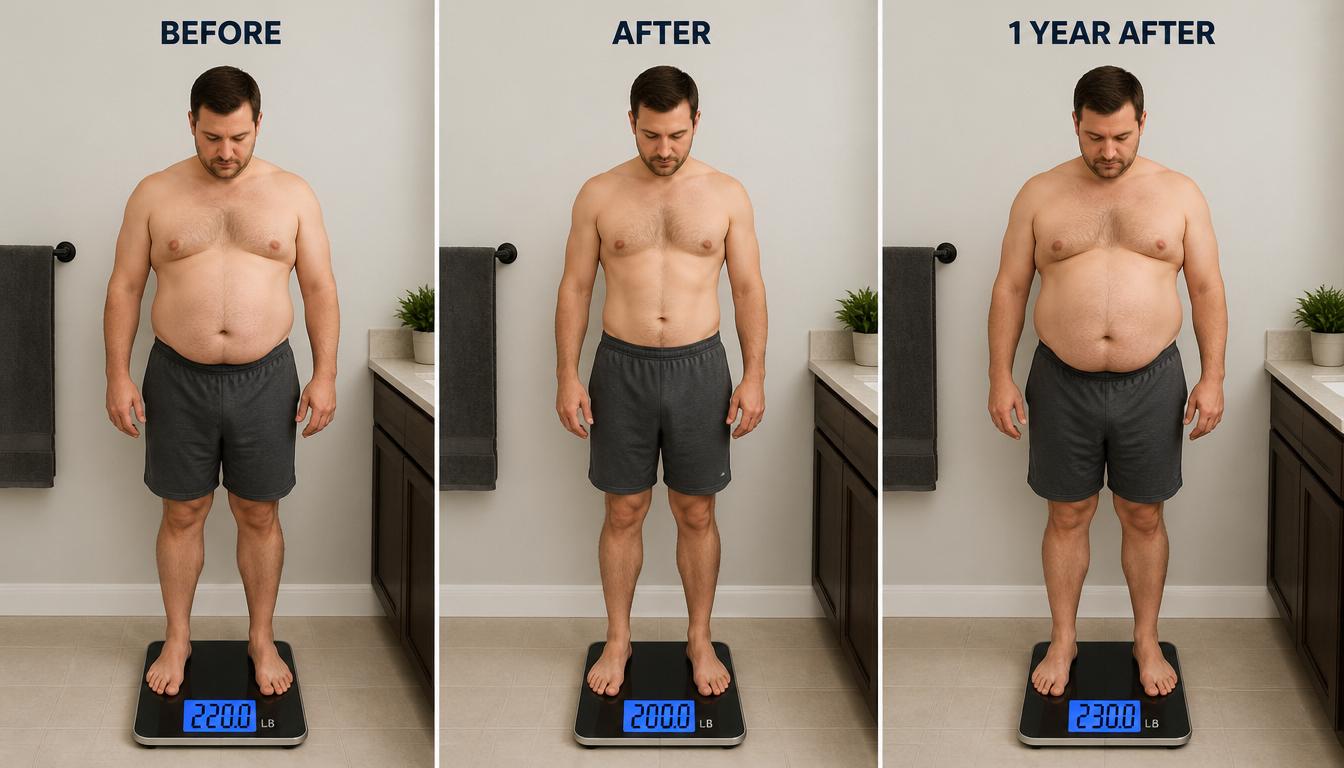
It's Easier to Lose 20 Pounds Quickly than to Lose 20 Pounds in a Year
No, That is Not a Typo: It is easier to lose 20 pounds (9kg) quickly than it is to lose 20 pounds in a year. Why do I say that? Because, I see plenty of people lose 20 pounds or more in a short period of time. I see very few who keep it off for a year. Obviously, it's easier to lose it than keep it off. That's why I don't get too excited when someone tells me about the new fad diet that they are on and how much weight they have lost over the last few months. If your goal is to lose it and then gain it all back, then that's just fine. You laugh, but I knew a trainer who specialized in that. Every year, right before New Year's, he'd lose a bunch of weight, then go around bragging about his weight loss, and then sign up weight loss clients - even though he was still clinically obese. And it worked. He got lot's of clients that way. And most of them lost weight, and almost all put it right back on - including himself. This is typical of people who go on quick weight loss diets. They stick with it for a while, but it's not a lifestyle that they can maintain, so they get off the diet, go back to their old ways and gain the weight back. Unless someone is extremely overweight, I encourage them to only lose ½ to 1 pound (0.22 to 0.45 kg) a week AT MOST! No, you're not going to get a million Instagram followers, but you'll have a better chance of overall long-term success.
Story Time:
A potential weight loss client come to me stating he wanted to lose 35 pounds (16 kg). He seemed pretty motivated, so I started describing a goal of losing about a pound a week. He stopped me and said that wouldn't work because it would take too long. I asked him how long he had been trying to lose weight? He said a couple of years. So I asked him how many pounds did he lose last year? He gave me a sheepish grin and said he gained 10 pounds. I responded, "If you had lost only ½ pound a week last year that would have been 26 pounds. Subtract the 10 pounds you gained and you would be at your goal right now. Losing ½ pound a week is relatively easy." A few minutes later, I overheard the above mentioned trainer telling him he would teach him "the secrets of weight loss". A year later they were both fatter. There are no secrets of weight loss.
My Own Story:
Years ago, before I got serious about my health I took a job sitting behind a desk all day 60 to 80 hours a week - and gained a lot of weight. Went from a healthy, but skinny, 145 pounds to over 210 pounds. I realized I needed to make a change. All I did was change my lunch. Breakfast and supper stayed the same, typically two eggs and oatmeal for breakfast. Supper was whatever my girlfriend of the time would make. She was a pescatarian (no meat, but fish is allowed), so it was typically tofu or fish with lots of vegetables and some bread or starch. Twice a week we would go out to dinner and I would order something I wanted. That doesn't mean I would pig out, it just means I ordered something I liked. The big change was lunch. Every day for lunch I would ride my stationary bike for 45 minutes while watching Judge Judy. I would cruise on the bike during the main parts of the show and go as fast and hard as I could during the commercials. Then I would eat some rice, tuna salad (a can of tuna, spicy mustard, dill relish, and a hard boiled egg mixed together).
That was it. That was my big weight loss plan. I'm not going to claim it was the world's best weight loss plan (probably shouldn't eat tuna every day), but it worked. I started losing about a pound a week. In addition to losing the fat, I got very fit. In fact, the fitter I got, the faster I rode the stationary bike and started losing fat even faster. I eventually added in some weight training sessions a couple of times a week and developed a pretty good physique. And to boot, I got to like biking so much that I started biking outdoors and even racing. Yes, the weight loss was slow. But I've kept the fat off and remained lean and fit for over 30 years now.
It's a lot easier to have restraint today if you know you'll have something you enjoy tomorrow
That should be your goal. Lose fat slowly while getting fitter, stronger,
healthier, and living a lifestyle that's maintainable. That's how you will keep
it off. Small changes to diet and an hour a day getting fitter, stronger, and
healthier. You won't feel deprived, because you know you'll be eating your
favorite foods soon. You don't feel hungry, because you're eating enough to stay
satiated.
"But I'm busy with work and kids, I don't have an hour a day!" If that's the
case, then find something you do every day that's less important than your
health and quit doing that. And then use that time for something more important
- YOUR HEALTH! If your health isn't worth an hour a day, you may need to
reevaluate your priorities. An hour a day doesn't mean you have to be at the
gym. It may mean doing some stretching or walking in place while watching TV. My
personal rule is to avoid idly watching television. I have a stationary bike in
front of my TV. When I watch TV, I riding the bike, or jogging place, or
stretching. Something besides just blobbing out.
If you can't find the time for your health, then find something you do every day that's less important than your health and quit doing that.
Story Time:
I have a friend who swears the only way she can lose
weight is on a keto diet. And she does - for a few months. And then she puts it
right back on - plus some. And in her mind that works. Apparently her definition
of "works" and my definition of "works" are different. My goal for people is to
lose weight and keep it off. Not to just lose it.
Her diet deprives herself of all the things she likes to eat. Sure you can do
that for a while. But can you do it for the rest of your life? She couldn't. And
to be honest, neither could I.
Take it Slow: If you wanted to run a marathon, would you go out the
next day and try to run 26.2 miles? No, of course not. But this is what dieters
do. They say I'm going to cut my calories down to 1600 calories a day and they
try to start with that on the very first day. As a result, they are hungry,
their body is unhappy, they have trouble maintaining their glucose levels, get
brain fog, irritable, and after a couple days give up.
Don't do that. Ease into your diet. Your body needs time to adapt to changes in
your diet.
95% of fights between couples is the result of someone giving up carbs 😜.
Start with small changes and work up over time. Go out and walk a 1/2 mile. A month later, bump it up 3/4 mile. Swap out that sugary drink for something with less calories. Have a treat once in a while.
The weight loss information on this site is based on losing fat in a healthy manner and keeping it off. No extreme diet plans, no quick weight loss plans, no gimmicks, just lose the fat while getting fit and get strong so that you can keep it off.
Link to this topic
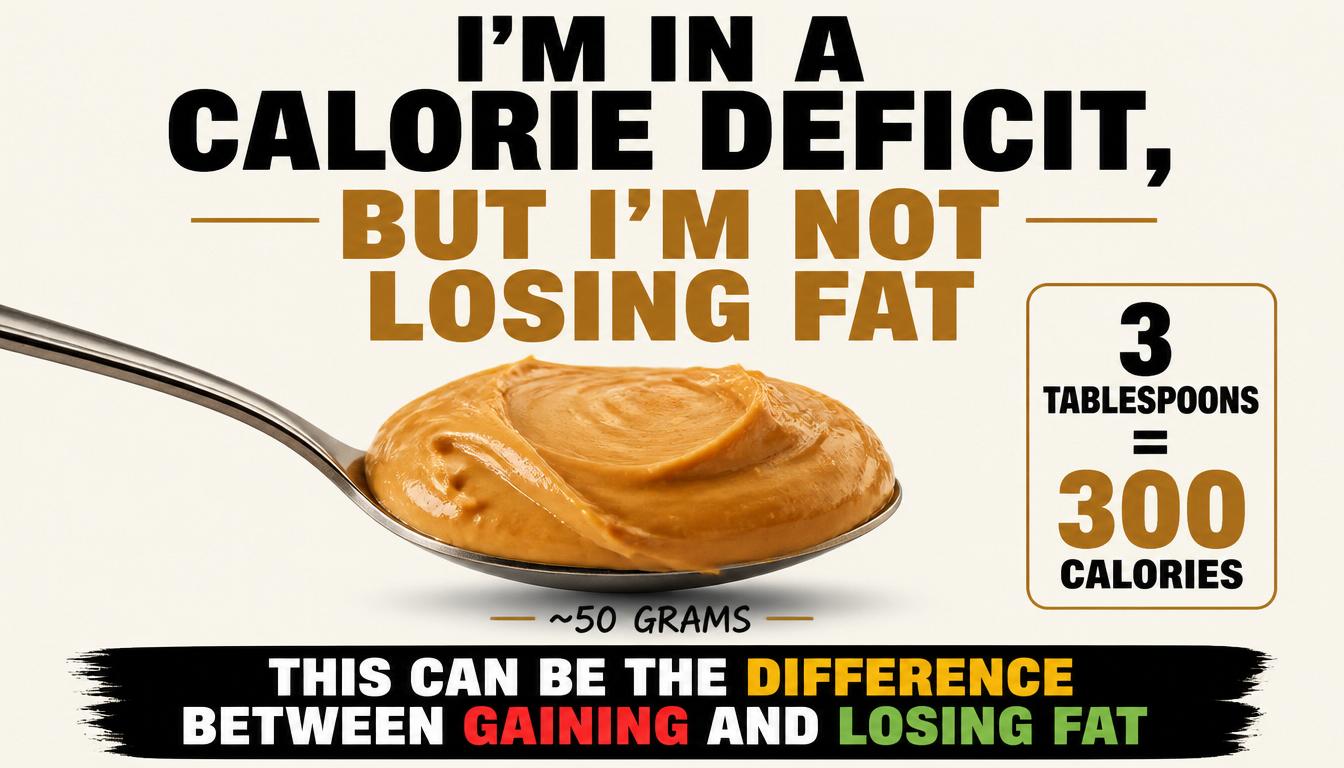
I'm In a Calorie Deficit, But I'm Not Losing Fat
If you are not losing fat, then you are not in a calorie deficit. PERIOD.
Otherwise, congratulations you are the first in recorded medical history.
If you think you are in a calorie deficit and not losing fat, then go get medically certified, because there's a Nobel Prize in it for someone. You'd be first medically documented case in human history. You would also be defying the laws of thermodynamics. There's a lot of prizes to go around.
Yes, hormones and other health issues can make it more difficult for some people
to get into a calorie deficit. But if you get there, by everything the
scientific community knows about the laws of biology and physics, you will start losing
fat. It's never happened otherwise.
And don't get me started on "Starvation
Mode".
There are no documented cases of someone being in caloric deficit and not losing fat. PERIOD.
I'm not trying to be mean, I'm trying to be help you, because I want you to succeed. But before you can succeed, you have to get that notion out of your head.
And we're not talking about water weight. A lot of things, hormones especially, can dramatically affect water weight. That's a different topic. We're only discussing fat loss here.
MEASURE and track you caloric intake for a week. And I repeat MEASURE. That means get a scale and weigh everything. You'll be surprised. Everyone always is.
I've worked with a number of people who thought they were eating 1200, 1600 calories, whatever, and when we actually weighed and accurately tracked, they were generally closer to 3000 than they were to 2000 calories a day. It's quite shocking actually.
Just a few hundred calories a day can be the difference between losing and gaining fat. That's a single handful of nuts, or two tablespoons of olive oil. That's why measuring and tracking is so important.
Good luck in your journey, I hope you succeed. And congratulations on that Nobel Prize.
And while on the subject, there are
no documented cases of any human adult only consuming 1200 calories a day and
not losing fat. I hear this one a lot, "I'm only eating 1200 calories a day and
I'm gaining fat." No you're not. MEASURE AND TRACK!.
An adult coma patient need about 1500 calories to maintain their fat levels.
Unless you are metabolically less active than a coma patient, then you will lose
fat on 1200 calories a day. Again, if the think you are the exception, there are
some prizes waiting for you.
Any human adult will lose fat on 1200 calories a day - you included.
P.S. If you're working with a nutritionist and they haven't told you this, then your nutritionist is a quack. Or you weren't listening - just like I'm 99% sure you won't listen to this. People will cling to this nonsense like a drowning man clinging to a lifebuoy.
Link to this topic
Healthy vs. Fattening
[Try to estimate how many calories are in this bag - answer below]
I hear this one all the time when I tell people they need to cut back on the amount of nuts they eat, "But nuts are healthy".
Yes, nuts are healthy. It
even has "healthy" in the name.
Yes, they are healthy - and they are
also fattening.
This bag has 3600 calories. That will add roughly a pound to your body fat. Not
the best choice if you are trying to lose fat.
I don't want to pick on this product, because I imagine it's a fine healthy snack. I'd eat them, especially on heavy lifting day. Nuts are great for muscle building, lots of protein, fat, and nutrients. It's just loaded with calories as all nut-based products are. Not so good on days you're trying to keep your calories low.
I was trying to help
a friend of mine lose weight. She swore was only eating 1600 calories a day, yet
she was still gaining weight.
On her desk was a jar of nuts. She said she would snack on them throughout the
day and that a jar would last about a week. A jar is about 5,000 calories.
That's over 700 calories a day right there.
Note: When we wrote down everything she had eaten so far that day, she was
already at 2800 calories (just the things she remembered and admitted to) and it
was only midday.
This is why I recommend everyone measure and track their food intake for 1 week.
You'll be shocked. I know I was the first time I did it.
Measure and track your food intake for 1 week. You'll be shocked.
There are plenty of healthy foods that are also high calorie, such as nuts, avocados, dried fruits, cheese, etc.
Eat them in moderation if you want, just understand how many calories they will add.
Link to this topic
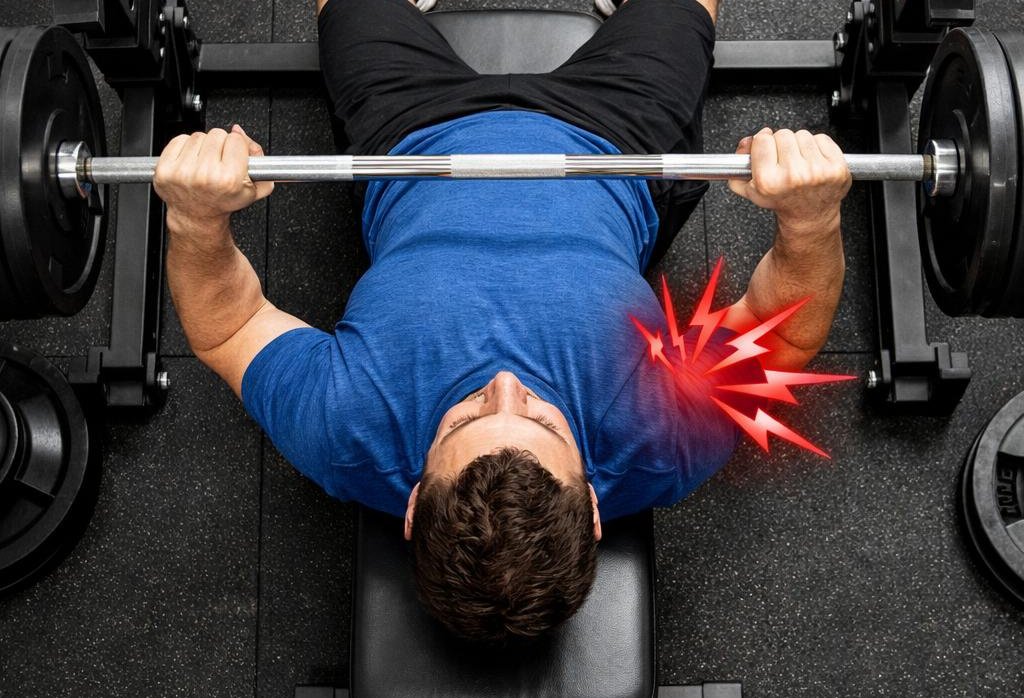
My Trainer Says Bench Press is Bad for Your Shoulders
Because very few trainers know how to train the bench to be done safely.
You can Google "proper form for bench press" and get a lot of good and bad advice.
But to bench press safely requires a lot more than just using proper form during the exercise. It also requires conditioning and strengthening the upper back and shoulder girdle so that it is strong enough and stable enough to safely handle the load your chest can push. And this is where a lot of gym rats get hurt. They become bench press specialists, doing bench and pecs and tris every workout while neglecting everything that holds your shoulder together.
"The fastest way to increase your bench press is to only work on your bench press.
The fastest way to an injury is to only work on your bench press."
Story Time:
Had a client who had a fixation on benching. He was benching 260 pounds (118 kg) and although he moved the weight fairly easily, I could that he wasn't able to fully stabilize his shoulder. He wanted to try to bench more. I explained that while his chest and arms were strong enough to bench more, his shoulders weren't ready yet. We'll work on strengthening the shoulder and then we'll go up. He got mad and even accused me of "holding him back", which made no sense. As a trainer I want my clients to excel, I definitely don't want to hold anyone back. Anyway, he got mad and said if I didn't let him bench more he was going to quit. I told him, I rather you quit than get hurt during our training. So he quit. About two weeks later I saw wearing a shoulder sling. He came up and told me he hurt his shoulder trying to bench 275 and that he wished that he had listened. When he shoulder healed, he started training with me again. The bad part was the gym gossip was that he got hurt WHILE training with me. I had to nip that rumor in the bud.
"Doesn't matter how strong your arms and chest are, if you can't stabilize the weight you will eventually get injured benching."
This general rule applies to all the big lifts. If your are unsteady, shaking, wobbly, you are an injury waiting to happen.
Story Time:
A while back, I was in the gym and a friend was doing safety bar squats. He told me he had to use the safety bar because he couldn't reach back far enough to use a regular squat bar. I warned him that if his shoulders are so tight he can't reach back, it's unlikely he can get in the correct position to bench safely. He ignored me, and a month later he was wearing a shoulder brace. He said he tore something in his shoulder while benching. And he was even up to his heavy sets yet.
"Mobility without strength is useless. Strength without mobility is an injury."
Without proper mobility in the shoulders, you will eventually tear your shoulders up benching.
Benching is a lot more than just using correct form while benching. It's
preparing your body to safely do a big bench. All the correct form in the world
won't save you if you have weak unstable shoulders.
Machines Are the Worst For Bench Pressing
Yes, you can build big muscles using the bench press and Smith machine. What you
can't do is build stability into your shoulders if that's all you use for bench.
To be fair, the machines can be useful for developing your chest and bench, but
should be considered an accessory exercise - not your main bench exercise.
Story Time:
My very first client had benched exclusively on machines and could bench 150 pounds. But when doing an actual bench press, he couldn't even bench the empty bar. Couldn't stabilize it. It was all over the place.
One of the problems with bench machines (and other machines as well), because
it stabilizes everything for you, you don't have to engage the muscles that are
needed in order to stabilize the bar. To be fair, someone who has been benching
correctly for years probably can engage all the necessary muscles when using a
machine. But if you haven't learned to do this, it is unlikely you're going to
learn it on a machine. And if you don't engage those muscles, they won't get
stronger.
This is why bench machines can be useful for advanced lifters, especially when
trying to break through plateaus and such. But they are terrible at teaching you
how to bench correctly and preparing you for a safe bench press.
Link to this topic

Light Weights are Better for the Joints - WRONG!!!
This is one of those things that's both true and wrong at the same time: "Lighter weights/higher reps are easier on the joints, bones, and tendons than heavy weights/low reps".
So while it is true that using lower weights with higher reps is easier on the bones, tendons, and joints, light weights do little to improve the strength of the bones and tendons. And isn't one of the goals strong bones and tendons?
In the short term, lighter weights reduce joint pain. In the long term, heavier weights build joint strength and will reduce joint pain in the long haul.
Using a wheel chair will reduce joint pain in the short term. What do you think the long-term effect will be?
If you want your joints to be pain free
when you get old, make them strong by lifting heavy.
Using same logic, walking in space is easier on the bones and tendons than walking on Earth. One of the problems that astronauts have when they return from extended space missions is they tend to get injured due to significantly weakened bones and tendons. Their bones and tendons weaken while in space due to lack of heavy stress.
Bones and tendons that are not stressed get weaker. Bones and tendons that
are stressed get stronger.
Heavy weights stress and strengthen bones and tendons. Light weights do not.
If you don't won't to break a hip when you get older, build strong bones by lifting heavy weights now.
If I build a wheelbarrow that can carry 200 pounds and use it to carry around 100 pounds all day, how long will that wheelbarrow last?
But if I build a wheelbarrow that can only carry 100 pounds and carry around 100 pounds all day, how long will that wheelbarrow last?
If you want your bones and tendons to last, build them stronger than they need to be.
Heavy weights build that 200-pound capacity wheelbarrow. Light weights build the 100-pound capacity wheelbarrow.
This is just one of the reasons that people who train light weights/high reps tend to have significantly more joint pain than those who lift heavy weights. Their training, while better than nothing, doesn't build truly strong bones and joints.
So, while it is true that lifting light weights is easier on the bones and tendons in the short term, building strong tendons and bones is easier on the bones and tendons in the long term.
If you can do more than 10 reps, you aren't strengthening your tendons and bones.
Tendons require heavy, intense loads (usually 70% to 90% of your one-rep max)
to stimulate the collagen synthesis needed to become stronger. If you can 10 or
more reps, then you are at less than 70% of your one-rep max and not building
tendon strength.
Likewise, to strengthen bones you need to be using a load that you can't do 10
reps of.
One of the goals of training is to not only prevent injuries in the gym, but to also prevent injuries outside of the gym
One of the goals of training is to not only prevent injuries in the gym, but to also prevent injuries outside of the gym. Strong bones and tendons help reduce injuries both in the gym and outside of the gym.
Which wheelbarrow do you want your body to be?
We're not talking about lifting stupid heavy weights. Lifting stupid heavy will injure you. We're talking about lifting in the 5 to 8 reps range that strengthens bones and tendons.
We're also not talking about rehab. Rehab is different from regular training. We're talking about how to do regular training that will reduce your chances of ending up in rehab.
Link to this topic

Protein Powder vs. Chicken
I catch chicken leg quarters on sale all the time. When it's on sale, I can buy 10 pounds bags of leg quarters with skin and bone for $6 = 815 grams of protein, 0 grams of carbohydrates, 80 grams of fat, and 900 calories. I just bought 60 pounds the other day.
That's about 32 servings of 25 grams of protein (typical protein drink = 25 grams of protein).
25 grams of protein from whey isolate cost about $1.17
25 grams of protein from chicken quarters cost about $0.26
The chicken is a win because it is much cheaper and also gives me much needed fat and more satiety.
And I'd rather eat chicken than a protein drink.
I cook all 10 pounds at once and freeze to reheat as needed.
Eggs are also a bargain compared to protein powder. 3½ large eggs cost about $0.50 to get 25 grams of protein.
| item | cost per 25 grams of protein | qty | carbohydrates (g) | fat (g) | calories |
| Protein Powder | $1.17 | 1 scoop | 0 g | 0.5 g | 110 |
| Chicken Leg Quarters | $0.26 (on sale for $0.58/pound*) | raw: 140 g = 5 oz | 0 g | 19 g | 269 |
| Chicken Breast (no skin, no bone) | $1.00 | 4 oz | 0 g | 2.9 g | 130 |
| Eggs | $0.50 | 3.5 large eggs | 0 g | 19 g | 275 |
Nutrition information is from CalorieKing
Link to this topic

Why You Should Ignore Exercise Studies
When I first got serious about strength training, being the nerd that I am, I began reading exercise studies. Not the popular newsstand magazine articles, but actual medical journals. One of the first things I learned is that you can find a study that supports practically any method of training you desire as being the best for muscle growth. High reps, low reps, once a week, five times a week, you name it, it was the best. How can that be? How can they all be the best way to train?
First you have to understand how exercise studies work and the fallacies they typically fall victim to which make them meaningless for the average trainee.
• Newbie Fallacy
Many studies use untrained subjects. An untrained subject will get similar
results almost no matter what they do. It's called newbie gains. High reps, low
reps, fast tempo, slow tempo, full reps, half reps, it almost doesn't matter for a newbie. If they
train hard, they will get similar gains almost no matter what they do.
And even if you did find differences in newbies, would it translate to someone
who has been training for more than a few months? Maybe, maybe not. Who knows?
And while studies on newbies are important for newbies, they have
little relevance for someone who is beyond the newbie stage.
Exercise motifs that work great for a newbie may have little to no benefit for
someone who's past the newbie stage.
And when they do specify "trained subjects", what does that mean? It usually
means that they have been going to the gym for at least a year. I;ve got news
for you. There's a lot of people that have been going to the gym for years that
are still in the newbie phase. "Trained subject" should have some sort of
progress criteria, such a strength, strength to weight, something other than
they've been just showing. Most gyms are full of "lifetime newbies" that have
been going for years and will never train in a way that will get them past the
newbie stage. For example
this study claims "strength-trained male athletes", but some are max
deadlifting 107.1 kg (236 pounds). Sorry, but that's not a trained male athlete.
A properly trained newbie should achieve that in less than three months. Those
are newbie numbers, I don't care how many years you've been going to the gym.
• Isolation Exercise Fallacy
Almost all studies fall into this fallacy. Exercise studies tend to only train a
single muscle or muscle group (typically quad muscles such as the vastus
lateralis and.or vastus medialis). They do this because these muscles are easy
to isolate and easy to study.
There's a huge difference between exercising a few isolated muscles and
exercising the whole body. When exercising only a small muscle mass,
overtraining and
neurological fatigue aren't really factors. However, when exercising the whole body,
especially when using multi-joint exercises, overtraining and neurological fatigue become
major factors in a long-term exercise plan. I can do leg extensions five times a
week and won't experience overtraining or neurological fatigue. But as soon as you some add in
some real exercises, like bench press, rowing, squats, deadlifts, then
overtraining and neurological
fatigue sets in real fast and has to be factored into your training plan.
This is why so many studies show that 3-5 sets is optimal. Sure, if all you are doing is
leg extensions, then 3-5 sets probably is best, because it is almost impossible to
overtrain if all you are doing is leg extensions.
What builds muscle best when exercising only a few muscles doesn't apply when
trying to build the whole body.
If I want to know how to build just my vastus medialis, there's hundreds of
studies for that. But that's not what I want to know. I want to know how to
build a whole body. So, these studies don't apply to me and probably don't apply
to you either.
• 10-Week Fallacy
Most studies are limited to 10 weeks or less. We all know that just about
everything works at first. I'm not that interested in what will work for 10
weeks, I want to know what will work for 10 years; over a lifetime; years and decades; not just
days and weeks.
Just about anything that you do that is different from what you have been doing
will work for a while (even this program). The question is will it work for
years.
And to be fair, this program will get most people well into the advanced stages.
It is NOT an elite program. To win the world powerlifting championship I switched for about
six months to a program that was focused on peaking for the powerlifting
championships. That program was unsustainable for long term. It was, however,
doable long enough to peak for competition. And then it was back to a year-round
program.
• Small Sample Size
Most studies use only a handful of participants, meaning one or two outliers can
greatly skew the results. This makes how candidates were selected extremely
important.
• Study Quality
Most studies barely qualify as a scientific study. Small groups sizes and the
fact that's it's almost impossible to do a double blind, placebo controlled exercise
study. All results have to be taken with a grain of salt simply because bias can
be introduced simply by the administrator having expected results.
• Gifted Athlete Fallacy
The opposite of the Newbie Fallacy is the
Gifted Athlete Fallacy. Some studies use exceptionally
gifted subjects. These people tend to be the genetic outliers. That's how they
became the greatest
at their sport. As such, their optimal training is different from the average
person.
There is the story of the Olympic gymnastics coach that would put his
new recruits through a meat grinder style workout. Most of the athletes' bodies
couldn't handle it and would just break down and they'd be cut from the team.
His reasoning was that to reach the Olympic level under his style of training, it
was going take hours and hours of training. Most people would break down with
that much training. He didn't have the resources to train everyone, so he used
this to quickly eliminate people who weren't going to survive his training
regimen. He was only interested in the genetic outliers, people with the potential to become
stars.
Compare this to a high school coach. If he applied this meat grinder approach to his athletes,
he wouldn't have a team. He might once in a lifetime run across a person capable
of training that way. Good for training genetic outliers, not so good for the
average person.
I was bike racing when Lance Armstrong was at his peak. He had a very high pedal
cadence. Everyone was trying to copy him. However, high cadence works best if
you have a really exceptional cardiovascular system and high VO2 Max. Lance
was genetically gifted with these. Even works better if you are
doping to improve your cardiovascular system.
Most people just went slower
when they tried to copy Lance's cadence.
Beware of studies based on exceptional athletes and don't blindly copy the
genetically gifted.
• Bottom Line
Very few modern studies get past the fallacies of only testing newbies doing
isolation exercises for a short period of time.
If your goal is to learn how to build muscle across your entire body over a
long period of years, than the study must address that. Studies about how to build a
small muscle group on newbies over a period weeks simply don't apply to your goal. Those
studies can answer important questions, they just don't answer the question you should be asking.
• So What Studies are Worth Paying Attention To?
Sadly, very few actual studies are worth using for training advice. They can be
useful for learning about muscles and how they work, but it's almost impossible
to find a clinical study that investigates what you need to know: How to build
and maintain muscle across the whole body and be healthy over a lifetime.
The best advice is to follow the tried and true. What has worked for hundreds of
years. What works for people like you in the real world. That's how the ancient
Greek wrestlers figured out their system of whole body strength training.
Hundreds of years of trial and error, weeding out what didn't work and keeping
what did work. That is what the Crusty Ninja program is based on. What has been
shown to work, keeping focus on what worked before drugs were introduced into
weight training.
Link to this topic

How to Bathe Your Cat and Create 6-Pack Abs
- Put both lids of the toilet up and add the required amount of pet shampoo to the water in the bowl.
- Pick up the cat and soothe him while you carry him towards the bathroom.
- In one smooth movement, put the cat in the toilet and close both lids. You may need to stand on the lid.
- The cat will self agitate and make ample suds. Never mind the noises that come from the toilet, the cat is actually enjoying this.
- Flush the toilet three or four times. This provides a "power-wash" and "rinse."
- Have someone open the door to the outside. Be sure that there are no people between the toilet and the outside door.
- Stand behind the toilet as far as you can, and quickly lift both lids.
- The cat will rocket out of the toilet, and run outside where he will dry himself off.
- Both the commode and the cat will be sparkling clean!
Always here to give you the best of tested advice in difficult times…
Sincerely,
The Dog
Ha ha, but what does this have to do with creating 6-Pack abs you ask?
Pick up just about any fitness magazine and featured on the cover will be an article for the latest greatest ab exercise. They'll have you bending at the waist in more ways than a contortionist scratching fleas - None of which will do much to improve your abs. To understand why this is so, you must understand TWO SIMPLE TRUTHS about abs.
Simple Truth #1 - Abs are skeletal muscles, just like biceps, legs,
calves, etc.
Simple Truth #2 - To make a your abs visible, your body fat must be 10-12%
or less.
So, keeping Simple Truth #1 in mind, if you want bigger abs, you must do an exercise that will make your ab muscles bigger. Did I hear you say, "well, duhh!" This seems so obvious that it's mind boggling that so few people follow this simple principle when trying to improve their abs. Like all skeletal muscles, if you want to make your ab muscles bigger, you must do an ab exercise that you can only do at most 12 repetitions of before the muscle tires out. This is a fundamental rule of bodybuilding. If you can do more than 12 repetitions, then the exercise will do very little to make the muscle bigger. If you did sets of 50 reps of bicep curls, would you expect your biceps to get bigger? No. The same principle applies to your abs. Most gym goers understand this principle, yet for some reason when working their abs, they completely ignore it.
So to make your ab muscles bigger, you must do an exercise that is too taxing for you to do more than 12 repetitions of.
The same applies to all your other skeletal muscles.
But studies say doing 20 or more reps builds just as much muscle as low reps. Read this.
Now let's look at Simple Truth #2. To make your abs visible, your body fat must be 10-12% or less.
How does doing hundreds of ab crunches, etc. help lower your body fat? It doesn't. Well at least not much. The abs are a relatively small muscle group, which means you burn very few calories when exercising them. In fact, it takes around 20,000 crunches to burn a pound of fat. For an exercise to help you reduce your body fat, the exercise must burn as many calories as possible. That means the exercise should engage the large muscle groups, such as the legs (or better yet, your whole body). Working your abs will do very little to reduce your body fat, and consequently will do very little to make your abs more visible. Again, "well, duh," yet people completely ignore this simple fact when trying to improve their abs.
It takes 20,000 crunches to burn a pound of fat.
So to sum up:
- Doing an exercise that you can do more than 12 repetitions of will do little to make your muscles larger and more defined.
- Exercising a small muscle group, such as the abs, will do little to burn calories, and therefore, will do little to reduce your body fat or make your abs more visible.
So back to our TWO SIMPLE TRUTHS
Simple Truth #1 - Abs are skeletal muscles, just like biceps, legs,
calves, etc.
Simple Truth #2 - To make your abs visible, your body fat must be 10-12%
or less.
Keeping theses two truths in mind, you can see that most ab routines touted in popular magazine articles will do little to improve the appearance of your abs. You must lower your body fat and that requires diet and doing exercises that burn a lot of calories. Since crunches, etc. work your abs, which are a relatively small muscle group, working them burns very few calories. You must also do exercises that will make your ab muscles larger. Again, if you can do more than 12 crunches, etc., then they will do nothing to make your abs larger.
Which brings us around to what does bathing your cat have to do with creating
6-Pack Abs?
Not much, which is about the same as most articles about creating great abs.
So why do so many people promote endless ab exercises to create 6-pack abs?
Because it's great marketing. It's easy
to sell a program of 10-minute ab workouts.
It's hard to
sell a program involving real cardio, real strength training, and proper nutrition.
Link to this topic
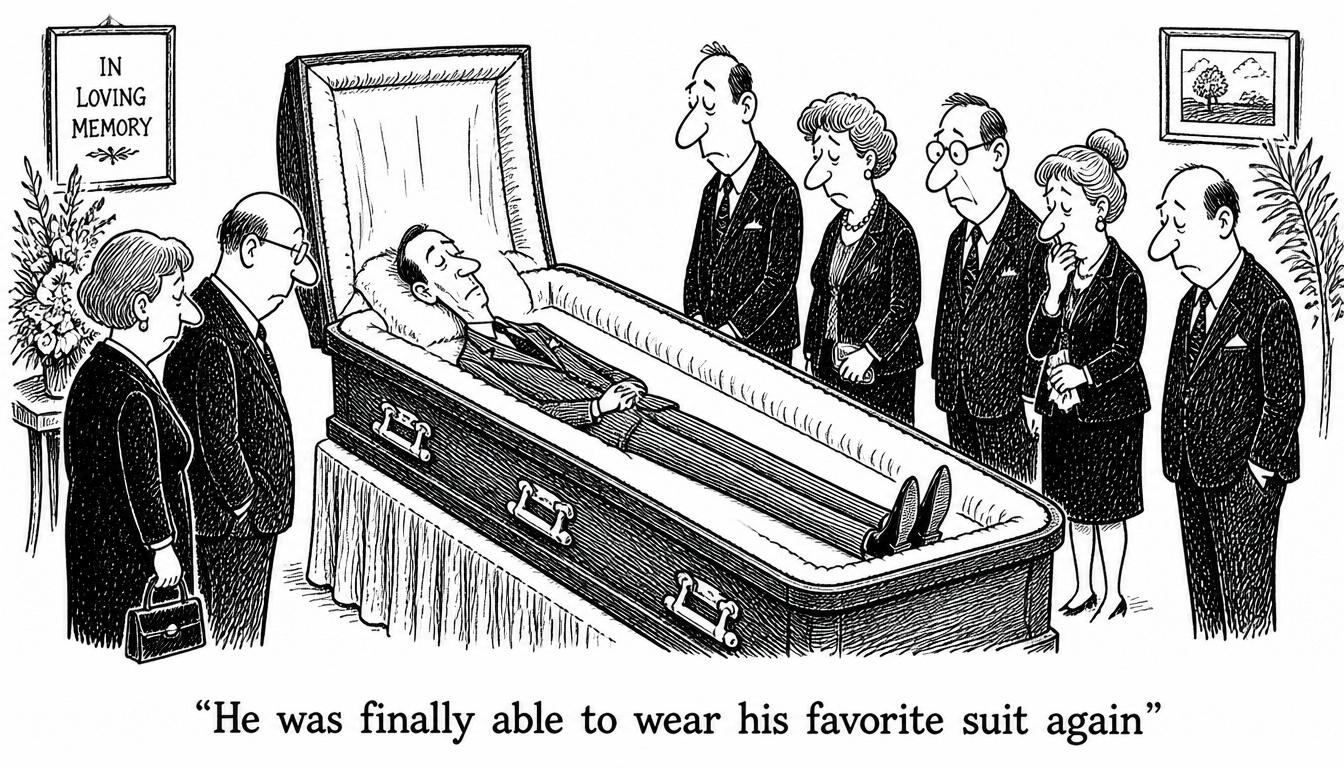
Extreme Weight Loss and GLP-1 Drugs
This list of health issues from extreme dieting with GLP-1 drugs is long. But most of the side effects are not due directly to the drug itself, but due to fact that they enable you to do an extreme diet. If you are just eating less of the same low nutrition food you ate before you went on the diet, then you'll likely have health issues, like bone, muscle, and hair loss.
Heart issues are also a problem with extreme dieting. I had a friend that was on a crash diet. One evening he was with friends watching a football game. He started the evening with bragging about how fast he was losing weight. He fell asleep on the couch during the game. Or they thought he fell asleep. His heart had stopped and he was dead before anyone realized. It was determined he died of cardiac arrest due to severe malnutrition. We need to eat for nutrition to stay healthy, not just for calories. Your heart needs vitamins and minerals to function.
And then the dreaded 18-month issue. I have nothing to back this up other than observation, so take it with a grain of salt. What I have observed is that people who do extreme crash diets have other major health issues pop up at about the 18-24 month mark. I've seen this at the gym over and over again. They're losing weight, looking great, and then about the 18-month mark, boom, they get hit some major illness. Cancer and extreme pneumonia seem to be common.
People are starting to document the side effects of GLP-1 drugs. Most of the side effects are not due directly to the drugs themself, but because they enable you to do an extreme diet.
When you severely restrict calories, you also severely restrict proteins, vitamins, and minerals required to produce and maintain infection-fighting white blood cells and antibodies. This compromises your immune system and your ability to fight off illnesses. Everyone occasionally develops cells with genetic mistakes or DNA damage. These abnormal cells are usually handled by the immune system before they can become cancer. But if your immune system is compromised from extended extreme dieting, it will be less able to do so. Also if your immune system is compromised, a mild virus can become pneumonia. There are plenty of opportunist diseases lurking in our bodies waiting for our immune system to let its guard down. Suppress your immune system for a year or more with extreme dieting and you're playing Russian roulette with your life.
If you're going to do an extended extreme diet, then work with a medical professional to ensure you are getting adequate nutrition. Don't just cut back on the foods that you are eating.
To be fair (and the critics are going to point this out - and they should), most people doing an extreme extended diet weren't the healthiest to start with and this is also likely a factor. So, there is that. But add a compromised immune system on top of that…
The other problem with extreme diets is that they just don't work in the long term.
Extreme diets don't work in the long term.
Anytime someone goes on an extremely low-calorie diet for an extended period of time, a large portion of the weight they lose is muscle. And when they gain the weight back, as most do, most of the weight they gain back is fat. Now they are just a fatter, less muscular version of their pre diet self - even if they weight a little bit less. I can't count how many times I've seen this happen. I try to warn people, but they are so excited that the scale is moving that they don't listen. What they don't realize is the scale is moving, but for the wrong reason. Don't trust the scale. It doesn't tell the whole story.
Don't trust the scale. It doesn't tell the whole story.
Two of my oldest sayings are, "You can't starve yourself skinny, but you can't
starve yourself fit"
and
"If you want to look strong and fit, get strong and fit."
You can't starve yourself skinny, but you can't starve yourself fit.
If you want to look strong and fit, get strong and fit.
My experience in observing acquaintances and people at the gym over the years
is that very few people look better a year after their crash diet.
The ones who do keep it off and actually improve their health over the long term
are the ones who also worked on improving their nutrition (by measuring and tracking
food) and worked on getting stronger and fitter.
I have yet to see anyone starve themself skinny and stay that way for any
length of time. I'm sure it happens; I just haven't seen it. This is especially
true of "only drink shakes diets". I've seen a number of people lose a lot
of weight while on a shake only diet, I've never known anyone to keep it off
afterwards. Are you going to only drink shakes the rest of your life?
Note: It's one thing to occasionally replace a meal with a shake, it's another
to consume only shakes in order to lose weight.
If you know of someone who has done an extended extreme diet that didn't include getting fitter and stronger and was able to keep the weight off, let me know in the comments. I'd love to hear about it. There has to be someone who's done it.
Avoid Shake Diets
A little off topic, but I had a roommate who went on a mail order shake diet. He got a month's worth of shakes and finished them off in a week and then went back to his normal eating until the next shipment came in and then did the same thing again.
This is why they say you have to stay on these drugs for life. But that's not 100% true. Yes, if all you did while on the drug (or crash diet) was just eat less, but didn't change your lifestyle, then yes, you will put the weight back on as soon as you get off.
If you are on one of these drugs also work on getting fitter and stronger. Don't just let the drugs enable you to starve yourself.
Link to this topic
My Fuel Tank Keeps Overfilling. I Must Not Be Putting Enough Fuel In It.
The myth of "starvation mode".
The fuel tank on my car keeps overfilling. I must not be putting enough fuel in it.
You laugh, but I hear this all the time.
Your body fat is your body's fuel tank. Put fuel in the body, it stores it in the fat tank. Burn fuel, it takes it out of the fat tank.
Yet people say, "I'm gaining fat because I'm not eating enough" which translates to "My fuel tank is overflowing because I'm not putting enough fuel in it".
And yes, there is such a thing as starvation mode (Adaptive Thermogenesis) in which your body starts reducing its fuel (calorie) consumption in an effort to keep you alive. It does this by subconsciously making you move less, reducing cell repair, digestion of nutrients, circulation, and breathing among other body functions.
However, starvation mode only happens during extended extreme dieting (which I strongly recommend against for a number of reasons) or when you are actually starving to death and have little remaining body fat.
If you are gaining fat, it is highly unlikely you are in starvation mode. Think about that.
I'm eating enough to gain fat, yet I'm starving. It sounds absolutely ridiculous when you say it out loud, yet people believe it.
Also, the total reduction in calories from starvation mode is less than 500
calories a day, usually closer to 50-200 calories per day for most people. The
500 calories a day is generally only seen in people who are skin and bones and actually starving
and getting close to death. Are you skin and bones?
And while 200 calories a day is not insignificant, it is not why you are gaining
fat.
So while this myth has a grain of truth to it, it is not why you are gaining fat. Look elsewhere. I recommend spending a week measuring you food and logging your caloric intake. It's an eye opener.
No one has ever been locked in a cell with little to no food and said, "Wow look how much weight I've gained. I'm clearly not eating enough".
Note: There is also the possibility of extreme dieting causing some weight gain by causing you to retain more water. But that's not fat gain and another reason to avoid extreme weight loss if possible.
Link to this topic
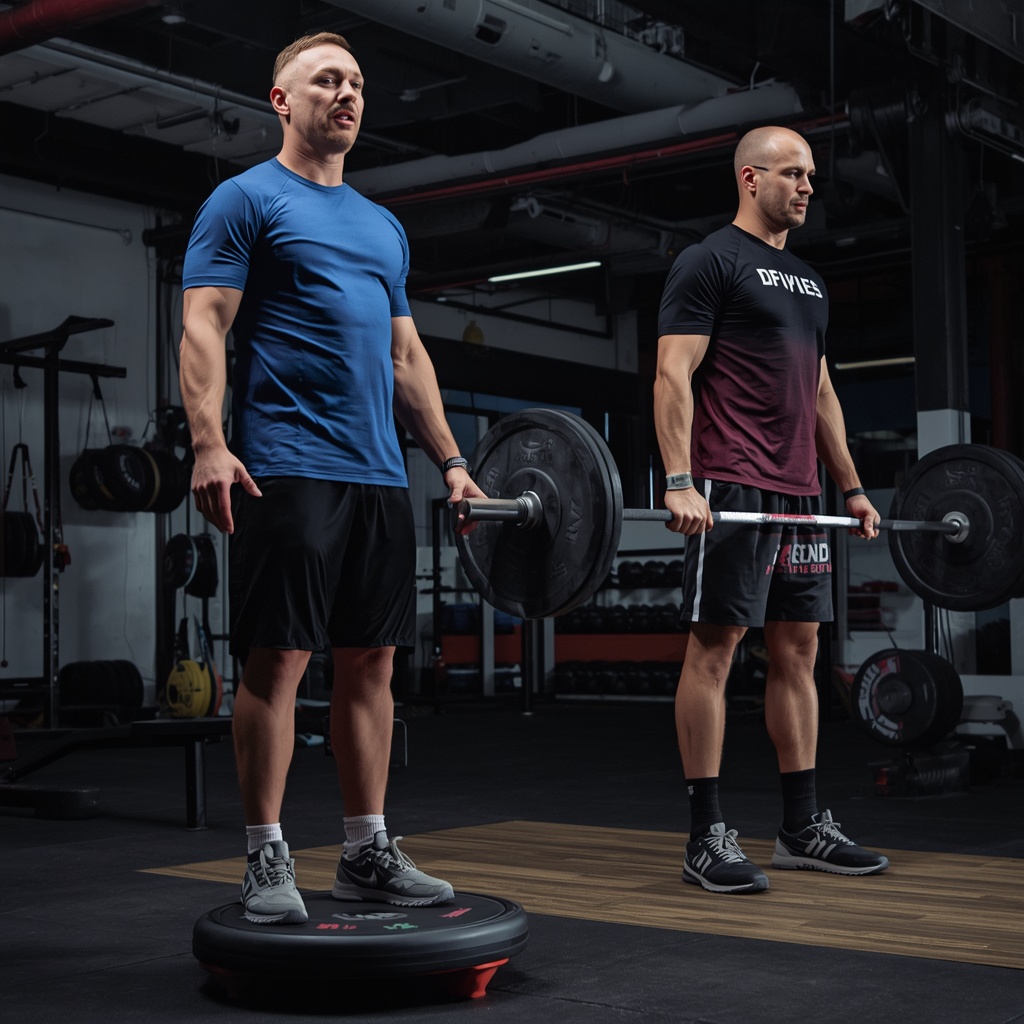
Functional Strength - or - Functional Weakness?
Functional strength is one of the current buzzwords in gyms today. It's a great concept and everyone should strive to make their strength gains functional. However, for some reason this great idea gets lost in "functional strength exercises." For some reason functional strength exercises usually involve doing exercises with very light weights on an unstable surface. Ask yourself, what's functional about that? - unless you happen to live at the end of a swinging rope bridge and must carry groceries across it, what's functional about walking across a wobbly surface while carrying light weights? Hmmm… And there's definitely nothing "strength" about it. Most people can already carry 15 pounds or more. It is a well-established fact that you don't develop strength by exercising with very light weights.
Who do you think is more functional?
A) Someone who can pick 200 pounds up off the floor.
B) Someone who can curl Barbie weights on a squishy pad.
Once a "functional" trainer was in the gym working with his client when his client pointed
at me and said, "I want to look like him".
The functional trainer replied, "You don't want to be like him. He's muscle-bound and
doesn't have any functional strength".
So, I looked at them both, and then cartwheeled away from them.
This "functional trainer" couldn't even
do a single pull up.
How non-functional is that?
To be fair, he could balance on
a squishy pad.
There's some truth to the idea of being muscle-bound. Many people with large muscles have not trained to develop the ability to use their muscles. Training to be muscular and training to be athletic (i.e. functional) are two different things, but they are NOT mutually exclusive. You can do both. A well rounded training plan should include basic gymnastics, body movement, and picking up and moving heavy objects into its training.
You can train for both muscles and functionality.
Note: The trainer who specialized in "functional strength" couldn't do a
single pull-up. How is that functional?
I'm not sure there's such a thing as "Functional Weakness".
So it begs the question, "where's the functional and where's the strength?"
Where's the functional and where's the strength?
And don't confuse difficult with beneficial. Rolling a quarter across your knuckles is difficult. When's the last time you saw someone in the gym practicing that? Simply calling it a functional strength exercise doesn't make it so. Abraham Lincoln once posed the question, "If Congress said that a goat's tail was a leg, how many legs would a goat have? Four. Calling a tail a leg does not make it so." Simply calling an exercise "functional strength" doesn't make it so.
These exercises really should be called "functional weakness."
Usually trainers justify these exercises by claiming they increase core strength and stability, which sounds reasonable. Why do trainers think these exercises are valuable for building core strength and stability? Because years ago a number of studies were conducted showing that untrained women exercising on unstable exercise activated more core muscle than those doing the same exercises on a stable surface. Sounds good… at first, but think about that for a minute…
--- Your minute is up ---
Activating a muscle isn't the same as strengthening a muscle.
It takes more than just "activating" a muscle to make it stronger. Walking activates muscles, but does little to strengthen them. So yes, it is slightly harder to do an exercise while standing on a balance pad. Riding a unicycle is harder than walking, but it's not going to build much muscle. Don't confuse difficulty with effectiveness.
Don't confuse difficulty with effectiveness
The real question is, "is it activating the core muscles enough to generate a physiological response that will improve core strength?" For example, one could easily make the same argument that standing is better than sitting for developing core strength, since standing activates more core muscles than sitting. And just like the studies on balance exercises, they'd be absolutely correct. It's true that standing is better than sitting for activating core muscles; No argument there. But are you with me on this? Simply activating more core muscles is not enough. Would you expect to achieve any level of fitness by doing "standing" exercises? Would you pay a trainer to do "functional strength" standing exercises with you? The same logic applies to balance exercises. Just because they "activate" more core muscles than something that is even easier to do doesn't necessarily mean they will have much benefit for you. Activating is not the same as strengthening.
So yes, studies prove it. Between the two, curling dinky weights on a wobble board is more effective than curling dinky weights on a stable surface. But the question isn't what's the LEAST EFFECTIVE exercise for core strength and stability. What you should be asking yourself is what is the MOST EFFECTIVE exercise for core strength and stability.
Simply "activating" more core muscle is not enough to ensure that you are going to develop more core strength. It's a well established fact that in order to increase strength you must work with a weight that is 80% or greater than your 1 rep max. This means that if you can curl 25 pounds for even a single rep, then curling 15 pounds on an unstable surface will NOT increase your strength, functional or otherwise.
What's also important to realize is that isolated balance skills do not necessarily translate into better sports performance. Balance is skill specific. Better balance on a wobble board does not necessarily translate to better balance on a football field. For example, running in correct form requires core strength and stability.
So unless you're training to be the world's best wobble board curler, are you really doing much to benefit your overall sports performance, or functional strength as some might call it, by doing wobble board curls?
Core strength is important! You should do core strength exercises. But twirling dinky weights on a balance pad, while better than sitting on a sofa (and better than just standing there), will not develop significant core strength, functional or otherwise. Again, balance exercises are better than doing nothing, but are they really the most effective way to develop functional strength?
So what defines functional strength and what is the best way to develop it?
How about about the ability to pick a couple of hundred pounds up off the floor? That requires balance, core strength, strength in the back, shoulders, legs, hand grip, etc. and the ability to coordinate the use of all of these muscles simultaneously. What's more functional than the ability pick up, carry, and move heavy things? Knowing how to protect your spine while carrying a heavy load, that's real world functional!
If you want to significantly increase your core stability, core strength, and yes, functional strength, do heavy overhead presses. What requires more functional core strength and stability than lifting a heavy object over your head? Who do you think has more functional strength: A) Someone who can curl 15 pounds on a wobble board? B) Someone who can lift and stabilize 100 pounds over their head? If you chose "A) the wobble board," then give me 10 ThighMaster squeezes and do your 4-mintue ab video. If you chose "B) overhead presses," then you are well on your way to understanding how to develop real functional strength.
So while wobbling on a stability pad twirling a pair of dinky weights around may closely resemble exercise, what's it really doing for you? Probably not much. It will, however, make your personal trainer very happy. They get to take your money while doing simple exercises that require little training, skill, or even thought on their part. You're happy because you were able to get through your workout without even breaking a sweat - And my God, who wants to break a sweat while at the gym?
Note: Typically, a balance skill can be learned in a few weeks. Once you've done that, unless your training to be a gymnast or circus performer, what are you really accomplishing?
So what are you really trying to develop?
Functional strength or functional weakness?
Important Tip: To develop balance, simply get a balance pad and practice a few
minutes a day while watching TV.
Or better yet practice each day while having a
conversation with your spouse - This also has the advantage of deterring you
from spending too many hours a day practicing them.
Don't get me wrong, I'm all for doing balance exercises. They should be part of your overall fitness plan. This is especially true as we get older. Balance work has even been shown to reduce the risk of ankle injury during sports. But this has more to do with improving ankle reflex time and is certainly not core strength. I incorporate balance work as part of the cool down of every workout. It's important to maintain balance skills, however, most healthy adults have pretty good balance. It is unlikely that you are in any great need of improving your balance. When's the last time you thought to yourself, "I need better balance"? Hey, if you really want to develop your balance skills, learn to ride a unicycle or high wheel bike.
So do your balance drills and enjoy them. Here is a link to some balance drills you can do at home. Just don't confuse balance drills with something that will develop strength, functional, core, or otherwise - they won't. How about this? Again, think about it; does standing upright holding 100 pounds over your head require and develop good stability and balance? What about squatting with a heavy barbell across your shoulders? Of course they require and develop tremendous stability and balance. Try doing them without good stability and balance and see what happens.
Stability exercises do give you a good excuse for doing an easy workout. And the long and short of it is, people are always looking for an excuse to do easy exercises and pretend that it's a real workout. Anybody seen my ThighMaster lately?
Link to this topic

The Crusty Deadlift
This program does not include a traditional deadlift. It utilizes what I call the "Crusty Deadlift" (CD). Most of you will recognize that it is very similar to a stiff-legged deadlift (SLDL) or Romanian deadlift. I didn't give a new name to be special, but because there's a lot debate and confusion about just what a SLDL, a Romanian deadlift, or a straight-legged deadlift are. And to be fair, there's a lot a crossover between the three: How high are your hips, how straight are your legs, does your knee angle change during the lift, how far is the bar in front of you. In reality, no matter what they call it, most people end up doing some hybrid version anyway. There's no official rules committee, so to avoid arguing over semantics, I just call it the Crusty Deadlift.
Why do we do a Crusty Deadlift?
- It's one of the best exercises for the posterior chain.
- To strengthen the core, spinal erectors, lower back, and hamstrings. We intentionally reduce the use of the quads (those are covered with squats).
- One of the best hip hinge exercises. Hip hinges should be part every overall strength program.
- From a functional point of view, a these better mimic how we pick things up in the real world.
- Less risk of injury due to bad form. It's easier to maintain form with a CD, and when form breaks on a CD, people tend to slip into a traditional deadlift. And since we are using a weight that should be very light for a traditional deadlift, the risk of injury is greatly reduced.
- The traditional deadlift is a fairly technical lift. It's hard enough to coach it properly when you are watching someone do it. It's almost impossible to coach when you are not there. Maintaining correct posture, the timing from shifting from pushing with the legs to hip hinge. Get it wrong and you get injured.
- While the traditional deadlift is great for demonstrating strength, it not the best exercise for building strength. These are two different goals.
I love traditional deadlifts. I hold records in deadlifting, I'm not a fan of it for basic training. The traditional deadlift is great for demonstrating overall strength in a competition, but it is not the best for building overall strength. Not saying it's not useful (and fun, I love them), just that there are better alternatives to achieve the same goals.
It amazes me how many people confuse what is best for the purposes of a competition vs. what is best for general training. They are not always the same.
Why the traditional deadlift is not the best variation for building muscle:
Some of the basic problems with the standard deadlift for building muscle is the shortened range of motion. In competition, shortening the range of motion is generally a good thing. It allows you to lift more. This is why most descriptions of how to do a deadlift train it this way. It boggles my mind how many people don't understand the difference between the best form for competition and the best form for training. Two different goals, therefore they are not always the same.
One of the fundamental truths of strength training is that you build muscle faster by exercising under load through a greater range of motion. The most important part being when the muscle is stretched. The conventional deadlift purposely avoids getting your muscles into a stretched so that you can move more weight. Again, two different goals. The Crusty Deadlift purposely puts your hamstrings and glutes into a loaded stretched position in order to build muscle faster. You will have to check your ego at the door, because in this position you will have to use a much lighter weight. You will be repaid by faster muscle growth.
How to do a Crusty Deadlift:
Note: Most of the advice about deadlifting is geared towards increasing how much you can lift. The advice here is geared towards making the lift safe and effective for our goals. As an example, rolling your shoulders forward will increase how much you can deadlift. You hear that advice often. And it's good advice if you are competing. However, it puts your shoulders at a greater risk of injury. Other than ego, there is no actual exercise benefit to this. You will not get stronger faster by rolling your shoulders forward. And you definitely won't get stronger faster if you get injured.
- If at anytime during the lift things feel wrong, drop the bar. That one of the nice things about deadlifting in general. It's easy to bail.
- You legs are about shoulder width apart with the toes pointed slightly outward. Jump up and land with your feet shoulder width apart. How your feet land will show how far your toes should point outward.
- Knees are slightly bent.
- Spine is in a neutral position. You are going to maintain this neutral position throughout the lift. If you slip out of this position, drop the bar immediately. Trying to reposition the back while under load is an injury waiting to happen. Don't get into that habit.
- Neck is in a neutral position. Don't look up, don't look down, and definitely don't look sideways.
- Bar is over your the tips of your toes. If you bend down with your arms
hanging straight down perpendicular to the ground while keeping your back
flat, your arms will be able to grab the bar. This is what we want. We want
the bar out in front of us. Yes, this is much harder and you will
have to use a much lighter weight, typically ½ to ⅔ of the weight you can
deadlift.
Note: This is more forward than what most people do for a SLDL. This helps strengthen the spinal erectors more than when the bar is closer to the legs. And again, it also greatly reduces the amount of weight you can use. Check your ego at the door. - Shoulder are screwed into their sockets. This is their safe position. This applies to most lifts. It's hard to injure the shoulder when it is screwed tightly into its socket. This applies to bench press as well.
- Arms stay straight and perpendicular to the ground. Elbows stay locked. Do not bend your elbows. That's a good way to pull a bicep muscle. I've seen several people do it competition.
- Grab the bar with an overhand grip. DO NOT use a mixed grip. Use a hook grip if necessary (google it). I advise learning the hook grip as early as possible. It's much easier to learn when you are still using relatively light weights. I made the mistake of not switching to a hook grip until I was into the high 400s, and deeply regretted waiting so long.
- Initiate the lift by lifting the chest while driving you heels into the ground.
- As soon as the bar gets above the knees, drive the hips forward and straighten the knees.
- To summarize, lift in this order: Lift the chest, drive with the heels, and when the bar gets above the knees drive the hips forward.
- DO NOT attempt to add a shrug at the top. This risks moving the shoulders out of their safe position.
- When you reach the top, take a slight pause and slowly lower the weight
back to ground following the same path that it went up.
You should end up with the bar back to its original start position. This is going to require you consciously pushing the bar out in front as you go down. The natural tendency (and easiest route) is let the bar move back against the legs. Fight against that. - Avoid using a weightlifting belt if possible. We are training for the real
world. Are you going to put on a belt before you pick up a box or your
grandchild?
Also, for a belt to be effective you have to perform the Valsalva maneuver. This increases and then decreases blood pressure and aortic pressure. The sharp increase in aortic pressure can be risky for individuals with high blood pressure, weakened vessels, or a history of heart attacks.
There are some good reasons to wear a belt. For instance if you have a hernia or diastasis recti (separation of your abdominal muscles along the midline, creating a gap). Basically anything that creates a bulge when you lift that needs to be held in needs a belt. In such cases, you should consult with a therapist as to which exercises you should do and which you should avoid. Some exercises will make the condition improve, others will make it worse depending on what you have. Research this. - Never hold your breath during any exercise (except underwater swimming). It's unsafe and unnecessary. Learn how to maintain tightness while breathing.
- And as always, start with a really light weight until you get the form down.
For those who compete in deadlift events
I love deadlifting and hold a several deadlift records. The deadlift is a great demonstration of strength. However, it is not the best exercise for building. Remember, competition lifts are chosen because they are good at demonstrating strength. That does not necessarily qualify them as the best choice for building strength.
If you want to compete in deadlift, you're going to have practice deadlifts. Hire a good coach. Warning, it's hard to find someone who actually knows how to coach deadlifting. A lot people pretend to know, very few actually do.
Link to this topic
But My Trainer Does it a Different Way
If you are working with a trainer do NOT follow anything I do without passing it by your trainer first. Nothing can wreck training faster than following two coaches that are not coordinating together.
This page represents my personal training philosophy. If you see something I do (or from wherever) that you thinks makes sense, talk to your trainer about it BEFORE doing it.
Mine is NOT the only way. Your trainer works with you and knows your individual needs and goals much better than I do. They may have very good reasons for doing it differently. Ask them about it. They should be able to give you a good explanation.
Their explanation may be that I'm and idiot, and that's okay too.
And don't do any training behind your trainer's back. Make sure they know
everything you are doing that is related to your training. An effective training
plan must include all of your training. They can't make an effective training
plan if they don't know what you are doing.
Link to this topic
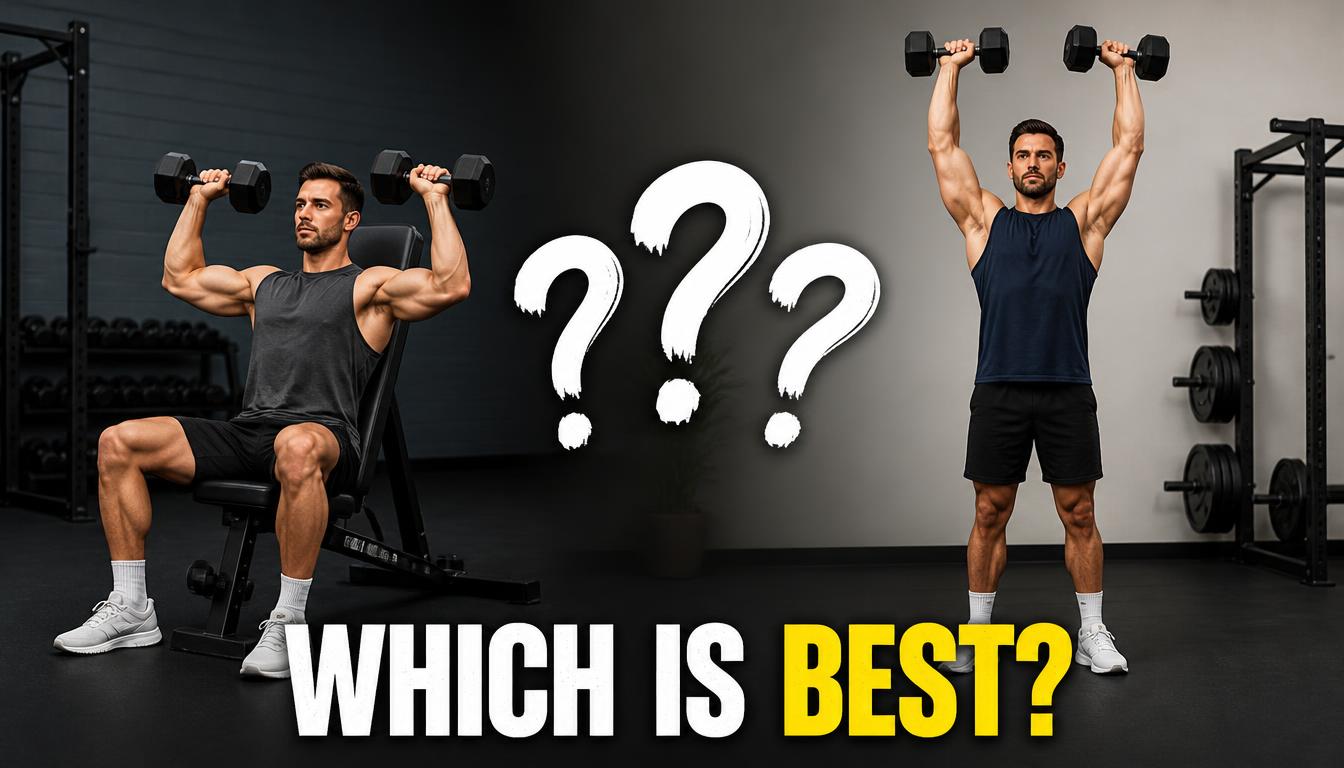
How to Choose the Best Version of an Exercise
Step 1: Define your overall goals.
Step 2: Determine what it is you want to achieve with the exercise that moves
you towards your goals.
Step 3: Pick the form that best suits that need.
Step 4: Ignore Steps 1-3, and do the version you like best.